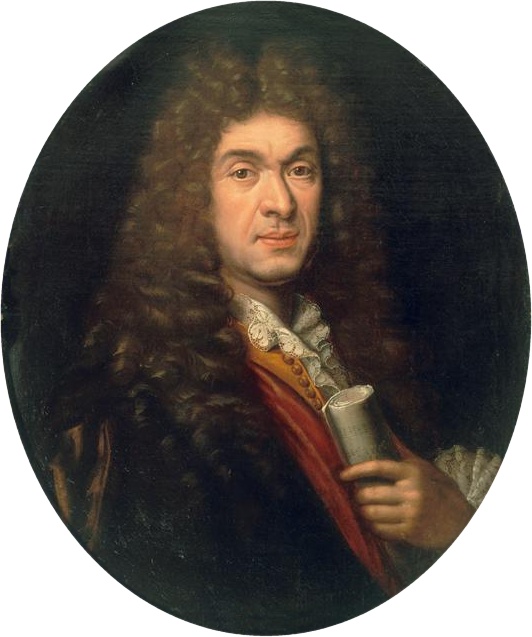
Jean- Baptiste Lully · Baroque
1632 – 1687
1677 · Grand motet · Fontainebleau
Tonality
Without a single tone indicated in the title. It is a great motete in several sections that follow the anthem text, with a bright and festive general tone.
Instruments
- Trumpets and timbals
- Sail to five parts (violins, three parts of violin and violin bass)
- Flutes, oboes and fages
- Continuous low (organ)
From the atril
Lully wrote his Te Deum in 1677 for the baptism of his eldest son, whose godfather was Louis XIV himself. It's a grand motet, the great sacred genus of the French court, for soloists, double chorus and orchestra with trumpets and timbales. But this work is famous especially for a tragic story.
In January 1687, Lully directed the Te Deum in Paris to celebrate the king's recovery after an operation. At that time the compass was marked by hitting the ground with a long stick, and at a time of enthusiasm Lully nailed it to his foot. The wound got gangrene, refused to have his leg amputated and died in March. Music, for its part, is pure glory: great coral blocks, trumpets fanfare, alone that alternate with the Tutti and a dazzling solemnity, at the service of the majesty of the Sun King.
What to hear
- The opening, with trumpets and timbals.
- The dialogue between soloists and double chorus.
- The end «In te Domine speravi».

