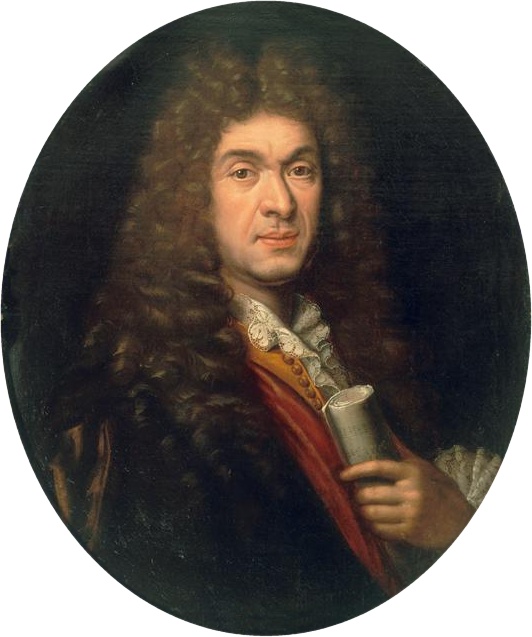
Jean- Baptiste Lully · Baroque
1632 – 1687
1686 · Tragédie en musique · Paris
Tonality
Without a unique tone. Like all tragédie in musique, he goes through many tonalities along his scenes, dances and chorus.
Instruments
- Sail to five parts (violins, three parts of violin and violin bass)
- Flutes
- Oboes and fages
- Continuous low (key, tiorba and violas da gamba)
From the atril
Armide, released in Paris in 1686, is the last complete tragedy of Lully and Quinault, and for many his masterpiece. Based on The liberated Jerusalem de Tasso, tells the story of the armed sorcerer, who wants to take revenge on the Renaud crusade but ends up falling in love with him.
The summit moment is the monologue of the second act, «Enfin il est en ma puissance»: Armida approaches with a dagger to Renaud asleep to kill him, but doubts, and hatred becomes love. Lully follows every change of mind with a recitation of prodigious flexibility, and the scene was considered for a century the model of the French decline. The work also contains one of the most famous passailles of the Baroque, a great dance on a repeated bass, and magical scenes of great effect. Gluck put music back to the same book almost a century later.
What to hear
- The monologue «Enfin il est en ma puissance».
- The fifth act passacaille.
- The final scene of the destruction of the Palace of Armida.

