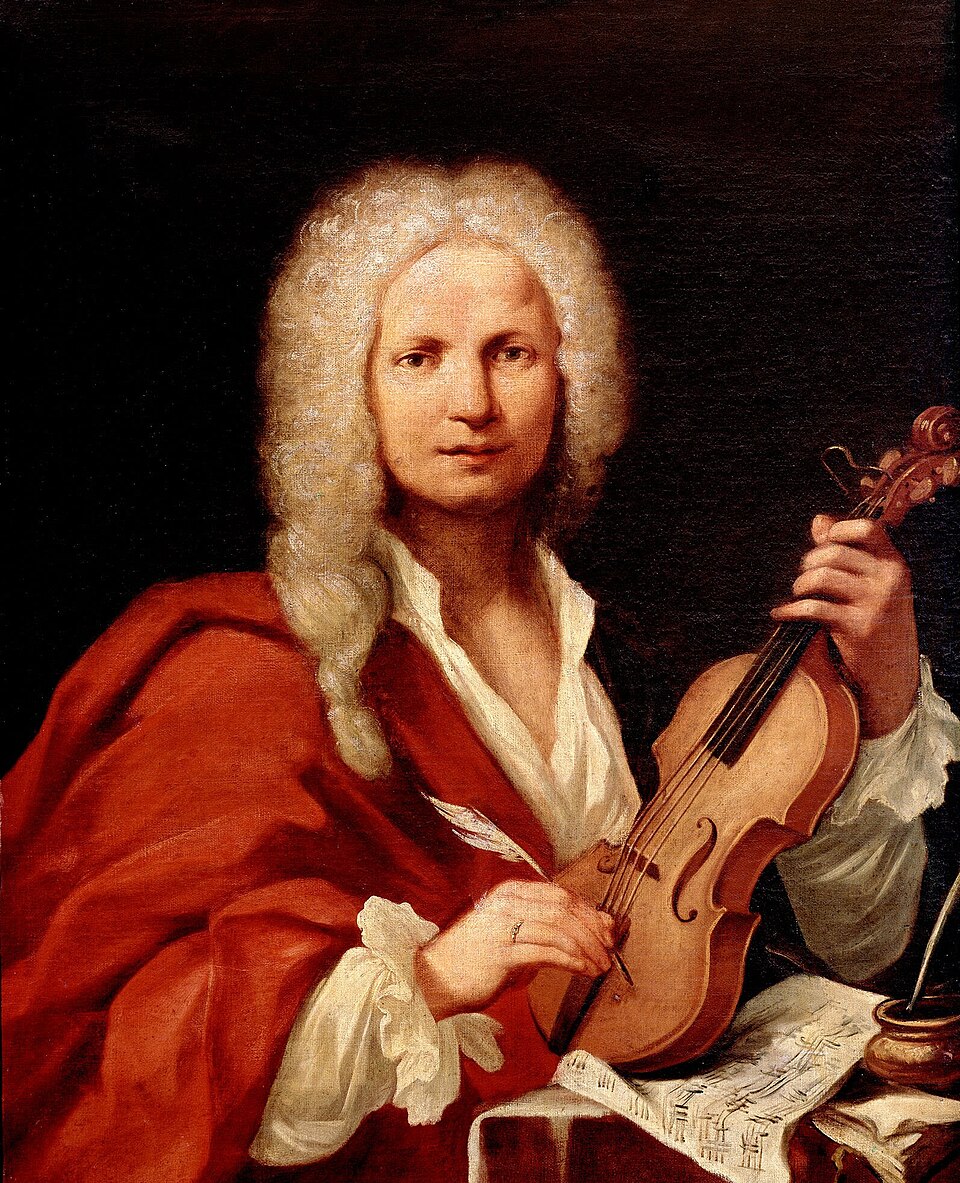
Antonio Vivaldi · Baroque
1678 – 1741
1716 · Sacred military prayer in Latin · Venice
Tonality
Without a unique tone. Like all oratoriums, he goes through many tonalities along his aryan, chorus and recitation.
Instruments
- 2 sweet flutes
- 2 oboes
- Chalumeau
- 2 clarings
- 2 trumpets and timbals
- Mandoline
- 4 tiorbs
- Viola d'amore
- Conort of violas all 'English
- Rope (violins, violas and bass)
- Continuous bass (organ and key)
From the atril
Venice was at war with the Ottoman Empire and had just resisted the siege of Corfu when Vivaldi premiered this oratory at the Ospedale della Pietà. The biblical history of Judith, which beheaded General Holofernes to save his people, was a transparent allegory: Judith is Venice and Holofernes, the Sultan. All the papers were sung by the young women of the Pietà, including the male.
What a musician enjoys most of this score is his color catalogue. Vivaldi had at his disposal exceptional instrumentalists and took full advantage of it: there are arias with viola d'amore, with mandolin, with chalumeau (prior to the clarinet), with tiorbas, with a set of violas da gamba and even with a forced organ. Each number sounds different, like a gallery of instrumental portraits. It is one of the summits of Vivaldi's vocal music.
What to hear
- The initial chorus of warriors, with trumpets and timbals.
- The arias with rare instruments: mandolin, viola d'amore, chalumeau.
- The scene in which Judith prays before acting, of a tense calm.

