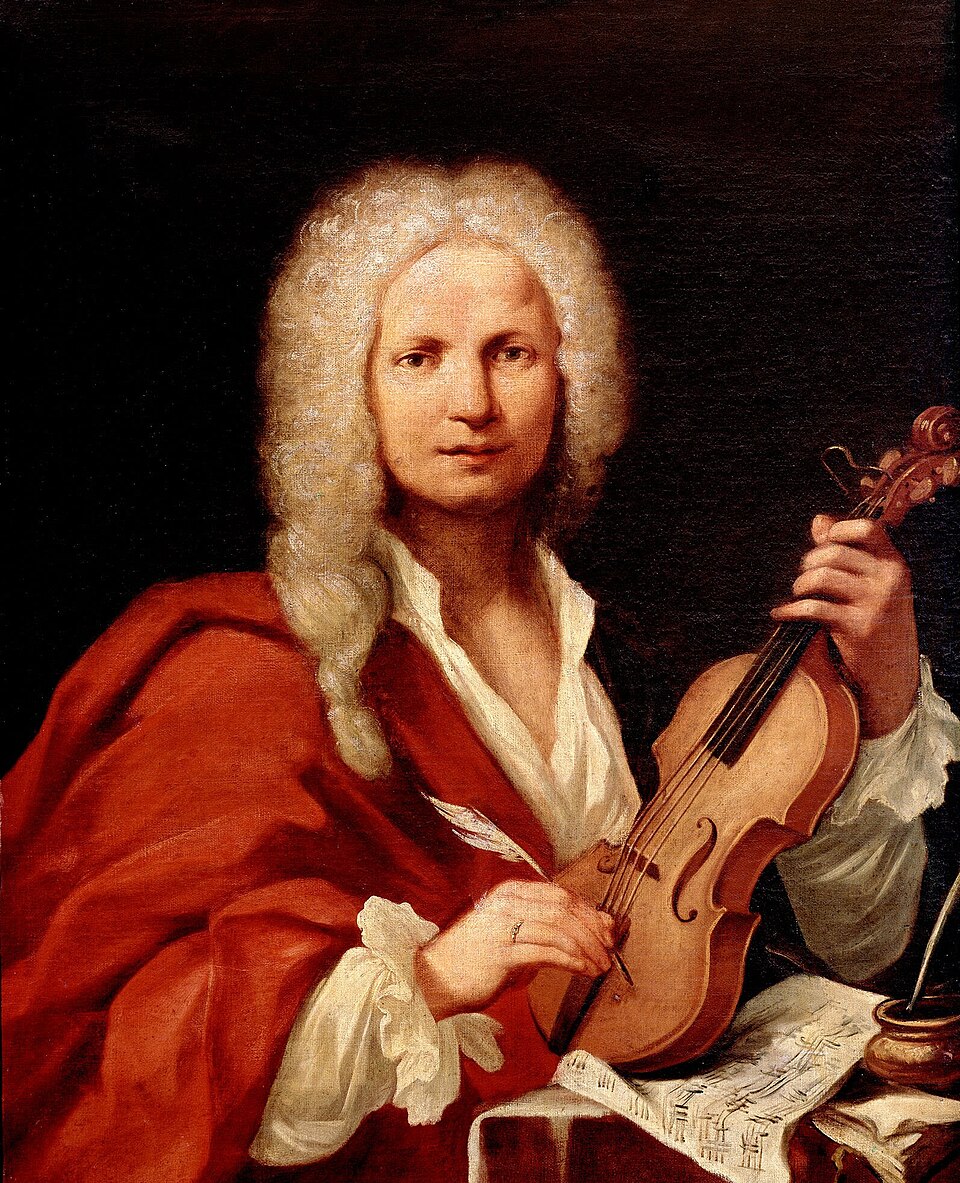
Antonio Vivaldi · Baroque
1678 – 1741
1711 · 12 concerts for 1, 2 and 4 violins and rope · Amsterdam
Tonality
Without a unique tone. It's a collection of twelve concerts and each has his own.
Instruments
- 4 violins
- 2 violas
- Cello
- Continuous bass (violone and key or organ)
From the atril
«The harmonic inspiration»With this title, published by Estienne Roger in Amsterdam, Vivaldi went from being a Venetian violinist known to a European celebrity. There are twelve concerts ordered with much cunning: one for four soloist violins, one for two and one for one, sometimes with cello. Johann Sebastian Bach was so impressed that he transcribed several for key and organ, and one of them, the one of four violins in itself, turned it into a concert for four keys.
Playing op. 3 in an orchestra is an exercise of reflexes. The tutti's rims are energetic and very clear, and among them the soloists pass fast figures, arpeggios and scales with an almost sports logic. Under that brilliance there is a new architecture: three movements, fast-slow-fast, with an orchestral theme that returns as a chorus. It is the concert model that would imitate all of Europe.
What to hear
- The concert No. 6 in the minor, which most young violinists study.
- # 8 for two violins in the minor, with a tremendous dialogue among soloists.
- The number 10 for four violins in itself is smaller, and then its version for four Bach keys.

