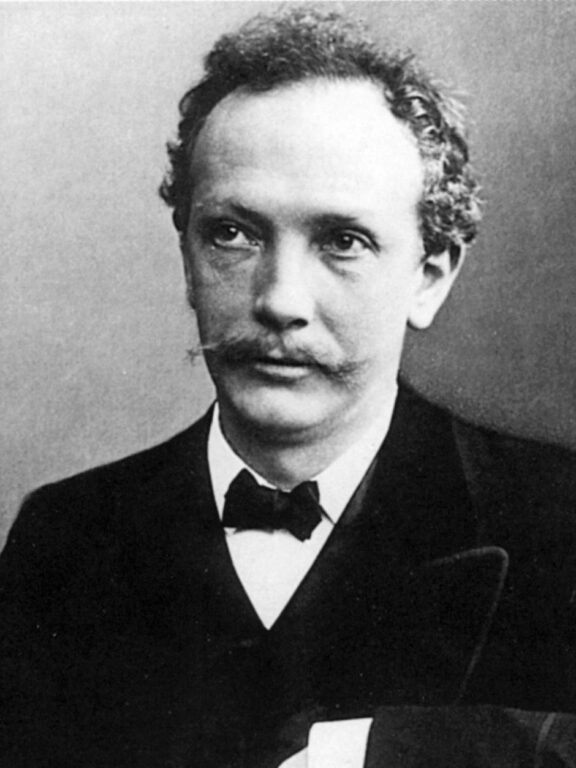
Richard Strauss · Romanticism
1864 – 1949
1889 · Symphonic poem · Weimar
Tonality
From the atril
Don Juan, premiered in Weimar in 1889 under the leadership of Strauss himself, who was twenty-five years old, was the first great success of the composer and made him the most commented musician in Germany. It is based on a poem by Nikolaus Lenau, in which Don Juan is not a mere seducer, but an idealist who seeks in every woman an impossible perfection, and ends up full of life.
I can INTEREST you.

The work starts with an overwhelming impulse of the whole orchestra, one of the most electrinating beginnings of the repertoire. The love episodes occur, with a single of great tenderness oboe, and then comes the heroic theme of the tubes, which is almost an emblem of young Strauss. In the end, after a crumbling party, Don Juan dies in a duel: music stops, a dissonance of the trumpets and a few dark pizzicates put an end to everything. For orchestra musicians it is a mandatory piece in auditions, especially for violins and tubes, for their difficulty and energy.
What to hear
- The orchestra's rolling start.
- The heroic subject of the tubes.
- The somber end, with Don Juan's death.

