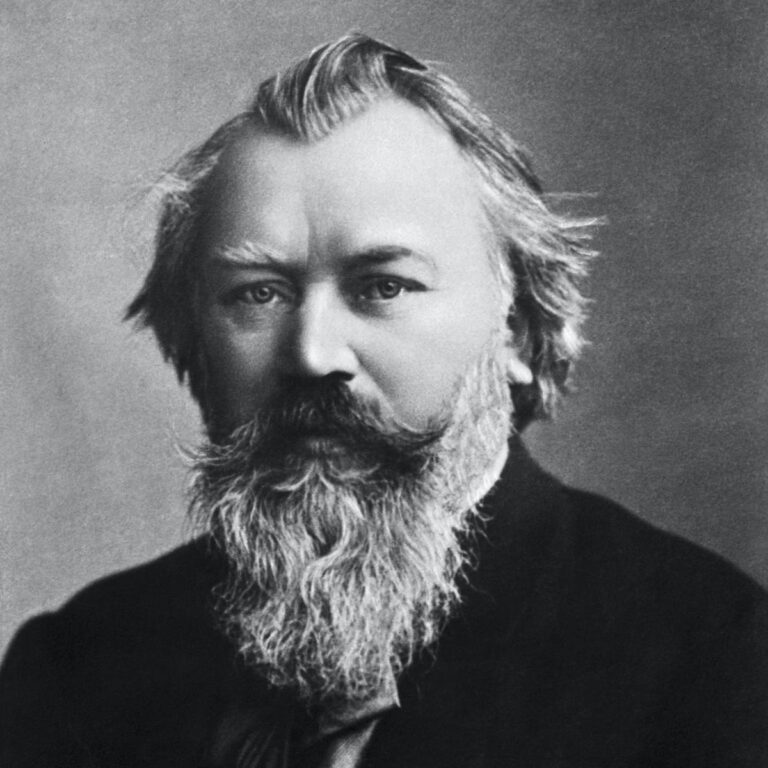
Johannes Brahms · Romanticism
1833 – 1897
1868 · Chorus, soloists and orchestra · Bremen
Tonality
Without a unique tone. Its seven parts go through several tonalities; the work begins and ends in fa major.
From the atril
Ein deutsches Requem It is not a mass of the deceased: Brahms did not use the Latin text of the Catholic liturgy, but passages from the Luther Bible chosen by himself. Nor does he pray for the dead, but comforts the living: he begins with «Blessed are they that weep, for they shall be comforted.». He wrote it after the death of Schumann and, above all, his mother. The premiere at Bremen Cathedral, in 1868, consecrated him as a great composer.
The first movement dispenses with violins and creates a warm and veiled sound with violas, cello and harps. The second, «For all flesh is like grass», is a funeral march of an overwhelming force that erupts in a triumph. The fourth, «How nice are your dwellings»He's one of the most beautiful chorus in the repertoire. The fifth, with a soloist soprano, was added later and talks about a mother's comfort. For a chorus, singing it is a transformative experience: it requires resistance, tuning and a very wide framiness, but it returns more than once.
What to hear
- The veiled sound of the first movement, no violins.
- The funeral march «All flesh is like grass».
- The choir «How nice are your dwellings».

