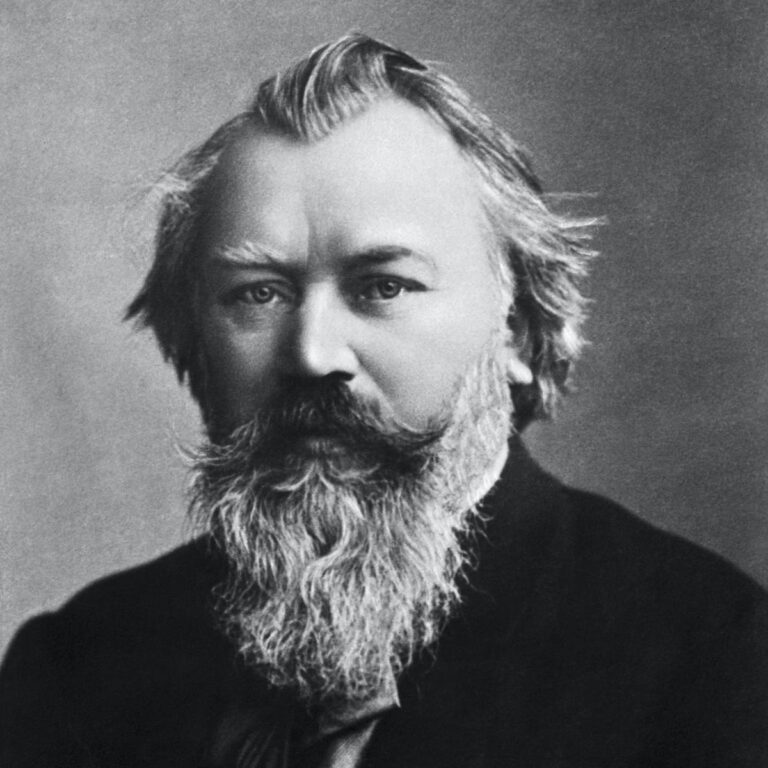
Johannes Brahms · Romanticism
1833 – 1897
1858 · Piano and orchestra · Hanover and Leipzig
Tonality
From the atril
The first piano concert was born of a crisis. Brahms began writing a sonata for two pianos who then wanted to turn into symphony, in the dramatic months following Robert Schumann's suicide attempt in 1854. Finally, the material became a concert. At the premiere in Leipzig, in 1859, the audience booed him: he expected a brilliant concert and met a symphony with piano.
The beginning is tremendous: a threatening trino in a minor re and a subject of violent jumps, in a storm climate. When the piano enters, it does so with an intimate and contained melody, in a contrast that defines the whole work. The central adagio, which Brahms described as a delicate portrait of Clara Schumann, is of a touching tenderness. The final round recovers the energy with a Hungarian air theme. For the pianist it is a test of physical strength and maturity: here virtuosism is at the service of a drama.
What to hear
- The threatening trino from the beginning.
- The intimate entrance of the piano.
- The adagio, portrait of Clara Schumann.

