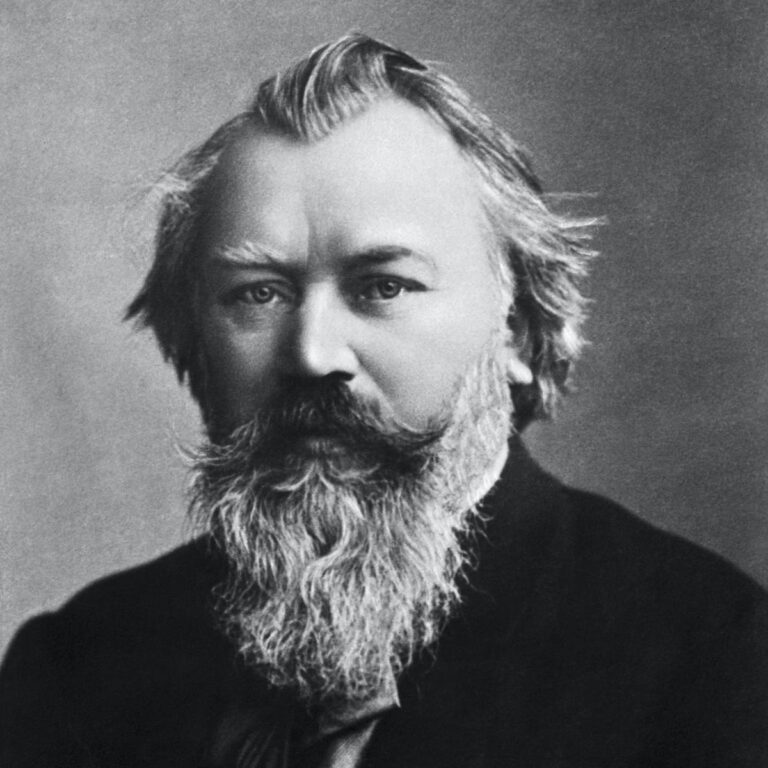
Johannes Brahms · Romanticism
1833 – 1897
1869 - 1880 · Four-hand piano · Vienna
Tonality
Without a unique tone. It's twenty-one dances and each has his own. The most famous, # 5, is in less sustained in the original for piano.
From the atril
As a young man, Brahms accompanied the piano on a tour of Hungarian violinist Ede Reményi, who discovered the music of the Zingari violinist. Years later, those melodies took place at twenty-one. Hungarian dancespublished in four four four-hand piano notebooks, which were their greatest commercial success and made it rich.
Brahms did not present them as his own works, but as «arrangements» of melodies he thought popular, although many were actually of Hungarian composers of his time. His genius is in the way of treating them: the sudden changes in tempo, the rubate, the contrasts between the melancholy and the frenzy typical of the czárdás. No 5 in the least sustained fa is, by far, the most famous. Brahms orchestrated only three; the others orchestrated others, like Dvorak. For four-hand pianists and orchestras are a festive and irresistible repertoire.
What to hear
- Dance 5, the most famous.
- The sudden tempo changes of the czárdás.
- The original four-hand version in front of the orchestral.
Listen
Brahms: Hungarian dances - François Ópez-Ferrer - Young Orchestra of the Galicia Symphony · SynphonicadeGalicia
When you press the YouTube player will be loaded.

