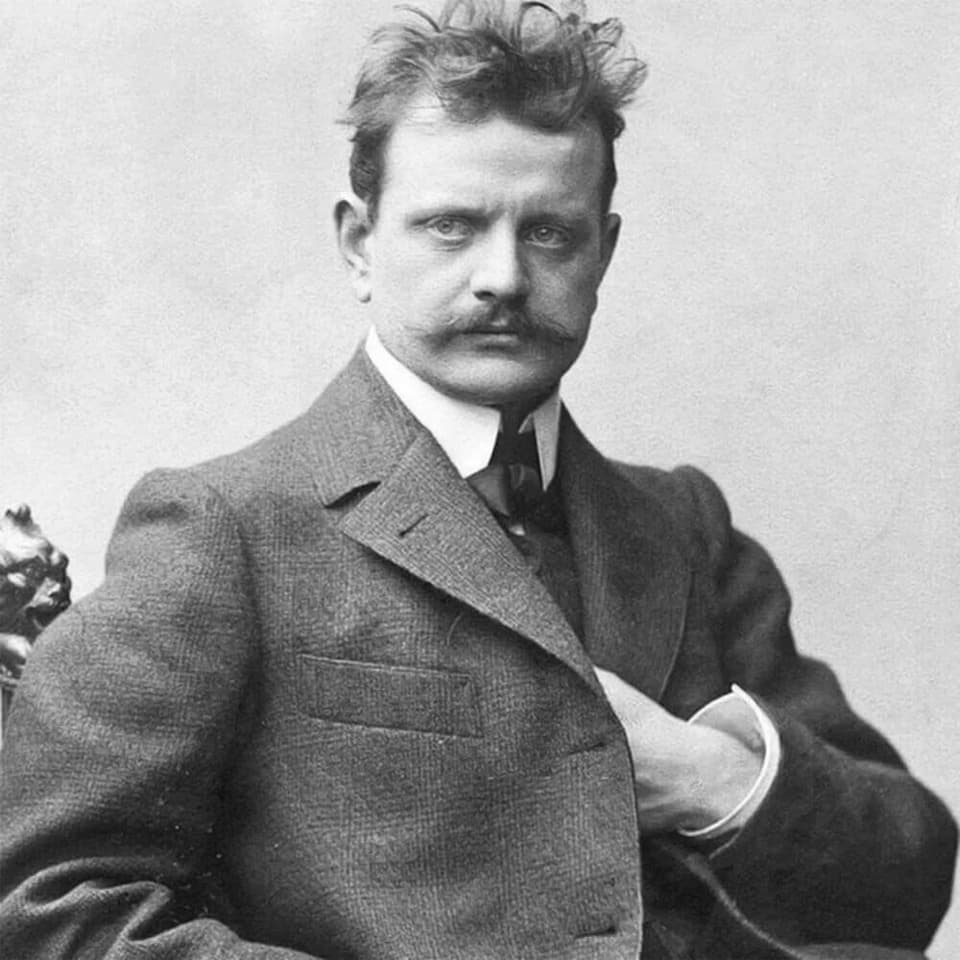
Jean Sibelius · Romanticism
1865 – 1957
1903 - 1904 · Accidental music · Helsinki
Tonality
No tonality indicated in the title.
From the atril
The Sad waltz comes from the incidental music that Sibelius wrote for Kuolema («Death»), a drama of his brother-in-law Arvid Järnefelt. On the scene, a sick woman, on her bed, dreams that she dances a waltz with fantastic guests; when they knock on the door, death appears. Sibelius sold the rights for a misery, and the piece became one of the most touched in the world.
Written for a string orchestra with some woods, tubes and timbals, it starts almost in a whisper, with a slow and hesitant waltz, like that of someone who barely stands. Little by little the dance is encouraged, accelerated and almost frenzy, until it is cut off with three chords. The last notes, in the violins alone, are extinguished in the nothingness. To touch it well requires an exquisite control of the tempo and nuances: everything is in the rubate and in the color of the strings.
What to hear
- The hesitant waltz of the beginning.
- The almost frenzy acceleration.
- The chords that interrupt the dance and the end in the violins.
Listen
Sibelius: Valse sad, Op. 44 No. 1 · Berliner Philharmoniker
When you press the YouTube player will be loaded.

