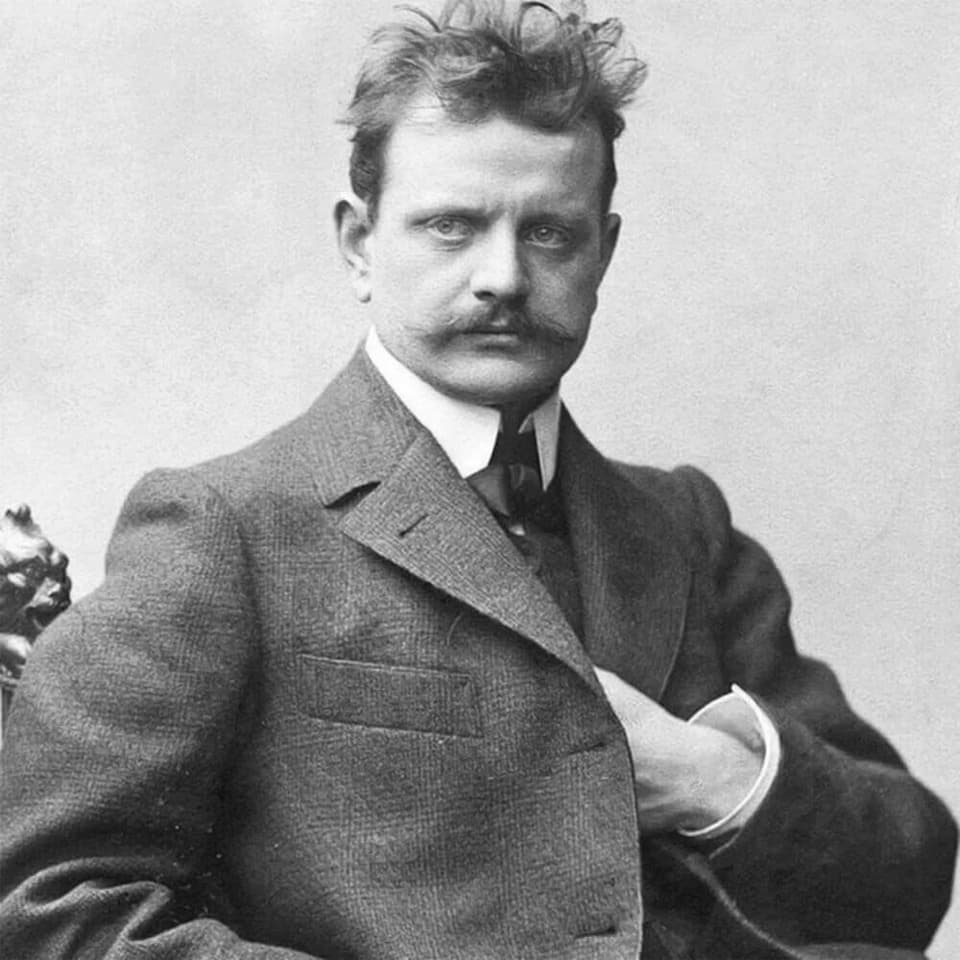
Jean Sibelius · Romanticism
1865 – 1957
1904 · revised in 1905 · Violin and orchestra · Helsinki and Berlin
Tonality
From the atril
Sibelius had dreamed of being a virtuous violinist, and his only concert, for that instrument, is in a way the work of a frustrated dream. After a failed release in Helsinki in 1904, it was thoroughly revised, and the final version was released in Berlin in 1905 under the direction of Richard Strauss. Today is one of the most played violin concerts of the 20th century.
The beginning is magical: the violin enters almost immediately, on a murmur of violins with a sativa, with a melody that appears to emerge from an ice-cold landscape. The first movement replaces development with a wide and very difficult cadence, located in the center. Adagio is a warm and passionate song, and the end, which Donald Tovey described as a poloness for polar bears, is a dance of heavy and obstinate rhythm on which the soloist unfolds octaves, harmonics and vertiginous passages. For the violinist it is a huge technical challenge, but also one of the most rewarding concerts of the repertoire.
What to hear
- The violin's entrance to the orchestra's murmur.
- The great central cadence of the first movement.
- The stubborn rhythm of the end.
Listen
Sibelius - Violin Concerto in D minor, Op. 47 (Maxim Vengerov, CSO, Daniel Barenboim) · EuroArtsChannel
When you press the YouTube player will be loaded.

