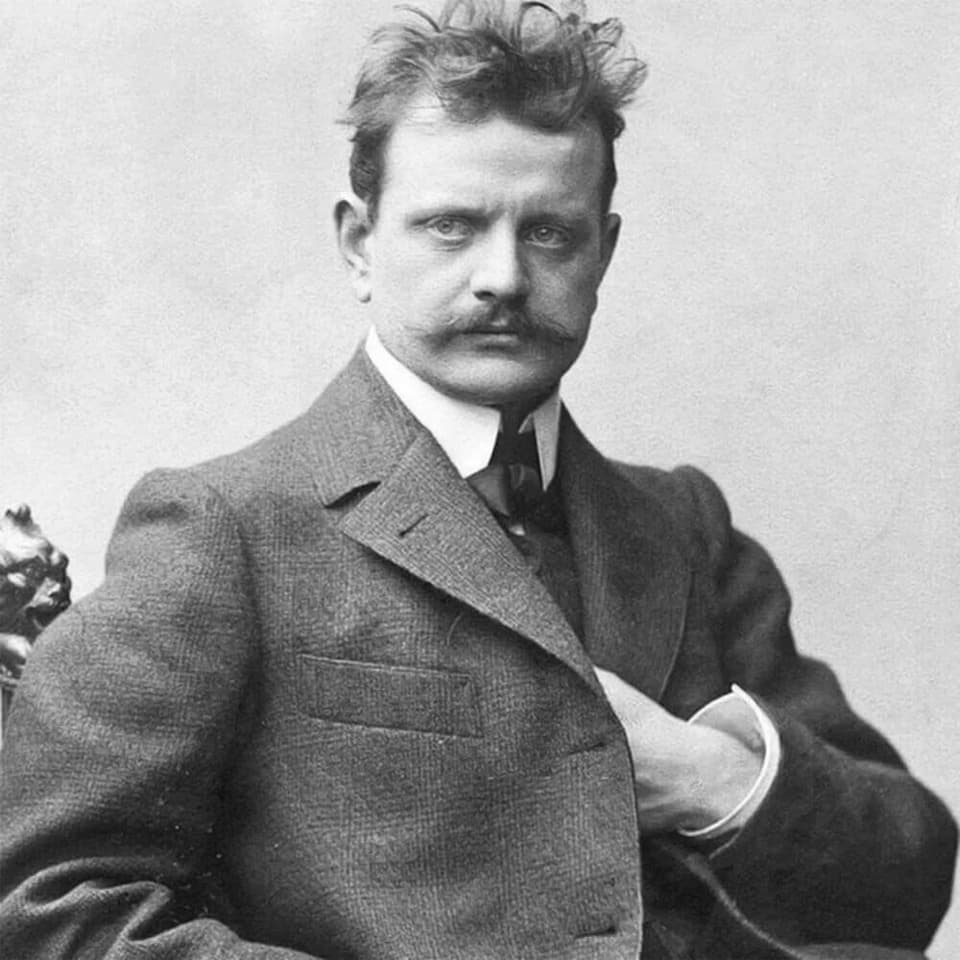
Jean Sibelius · Romanticism
1865 – 1957
1915 · final version in 1919 · Symphony · Helsinki
Tonality
From the atril
The Fifth premiered on the day of the fiftieth birthday of Sibelius, in December 1915, in the first World War, as a national tribute. Unsatisfied, he reviewed it twice, and the final version of 1919 has three movements instead of four, because he merged the first with the scherzo.
As he composed it, Sibelius saw 16 swans flying over his house and noted in his diary that it was one of the great experiences of his life. That image inspired the theme of the end: an oscillating melody in the tubes, like the slow beating of a few wings, on a fast trumolo of the strings. The first movement is imperceptible from a moderate tempo to a faster and faster scherzo. And the symphony ends with six isolated chords, separated by long silences, one of the most bold and famous endings of the repertoire: the orchestra has to be very accurate, and the audience contains breathing.
What to hear
- The gradual transformation of the first movement into scherzo.
- The «theme of the swans» in the tubes.
- The six final chords separated by silences.
Listen
Sibelius: Symphony 5 (Full) - Karajan · greatclassicrecords
When you press the YouTube player will be loaded.

