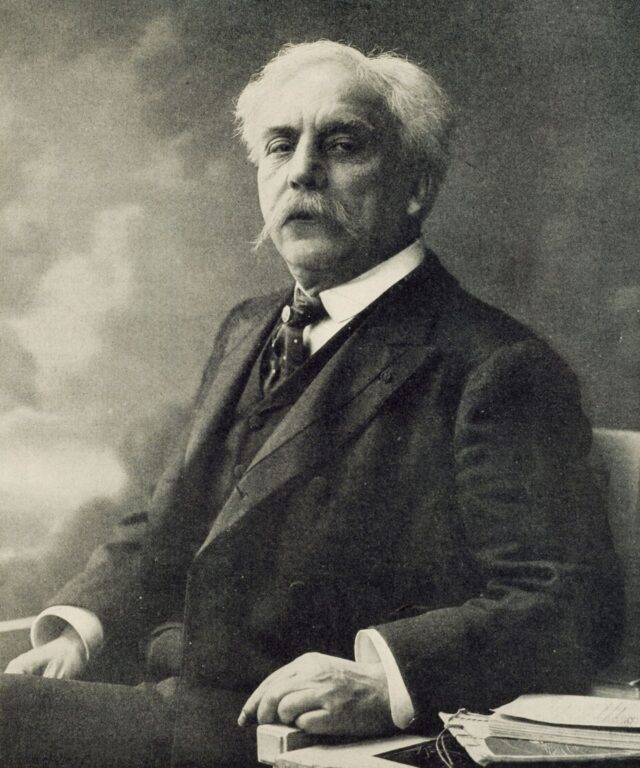
Gabriel Fauré · Romanticism
1845 – 1924
1880 · Cello and piano · Paris
Tonality
From the atril
Fauré wrote the Elégie in 1880 thinking of the slow movement of a cello sonata that never ended. It was released in 1883 and was so successful that the composer later made a version for cello and orchestra. Today it is one of the most interpreted pieces of the instrument's repertoire.
It is a lament in less than a contained intensity. The cello sings a severe and painful melody on piano chords that advance as slow steps; in the central section the music is agitated, up to a passionate climax in the acute record and then returns, exhausted, to the initial theme. For the violonchelist it is a test of sound and expression: you have to move without falling into sentimentality, with a very controlled arc.
What to hear
- The serious melody of the beginning.
- The passionate climax in the acute record.
- The exhausted return to the initial theme.

