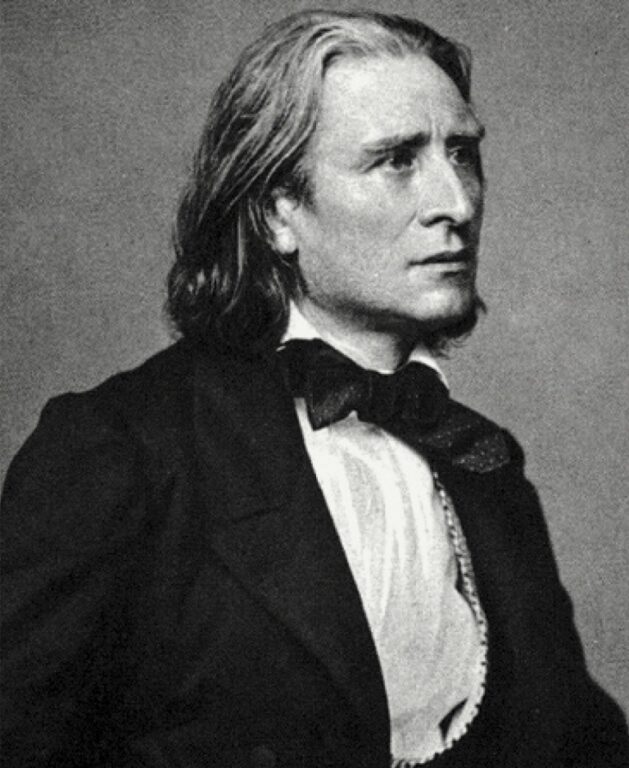
Franz Liszt · Romanticism
1811 – 1886
1852 · Piano alone · Weimar
Tonality
Without a unique tone. The twelve studies go through the tonalities following the circle of fifths, alternating a greater tonality with its relative minor.
From the atril
Liszt worked in these twelve studies for more than 25 years. He outlined them as a teenager, transformed them in the 1830s into pieces of an almost impossible difficulty, and in 1852 he published the final version, something more touchable but still fearless, dedicated to his master Carl Czerny. They are the summit of romantic pianistic virtuosism.
I can INTEREST you.

From the keyboard, each is a poem with its own title. Mazeppa describes the desperate ride of a hero tied to a wild horse, with chords and octaves that gallop without mercy. Feux forettes (Fattoos) is the opposite: very light passages that must sound like blinking lights, and it is perhaps the most difficult of all. Harmonies du soir is a dream of broad bells and harmonies, and Chasse- neige, a snowstorm in three-way. To touch them all is a feat reserved to few.
What to hear
- MazeppaThe wild ride.
- Feux forettesYou're very close.
- Harmonies du soirwith their bells.

