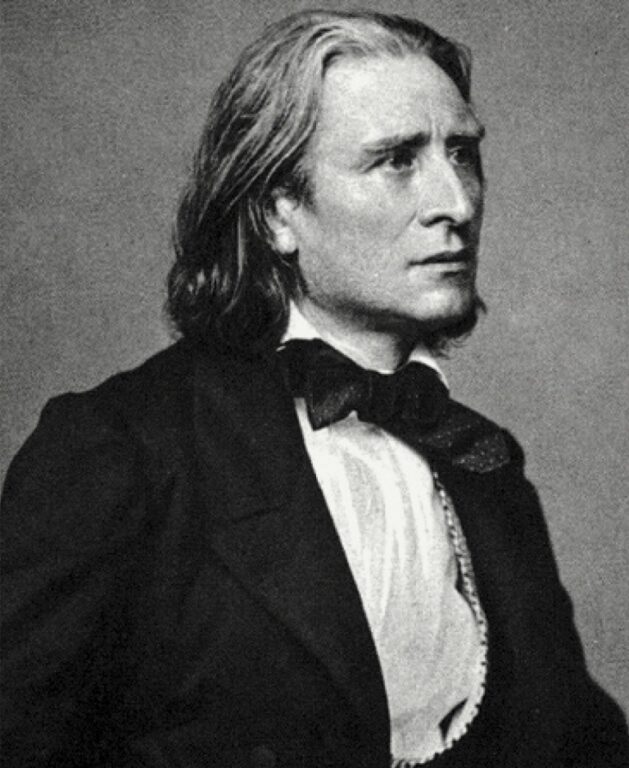
Franz Liszt · Romanticism
1811 – 1886
1850 · Piano alone · Weimar
Tonality
From the atril
All three Liebesträume (Love dreams) were born as songs, which Liszt later transcribed for piano. The third, on a poem by Ferdinand Freiligrath that invites you to love while you can, before the time of the farewell in the grave, became one of the most popular piano pieces of all time.
I can INTEREST you.

For the pianist, the great challenge is to make the melody sing, which is in the middle record of the piano, as if it were a human voice, while the two hands are distributed at the same time the singing and the accompanying arpegios. You have to make the melody hear above all else without the rest sound heavy. Among the strokes, Liszt introduces two small cadences, cascades of notes that must sound improvised and light. The climax is passionate, and the end is turned off with great tenderness. It's the romantic piece par excellence.
What to hear
- The melody in the middle record.
- Cadences between strokes.
- The end, tender and off.

