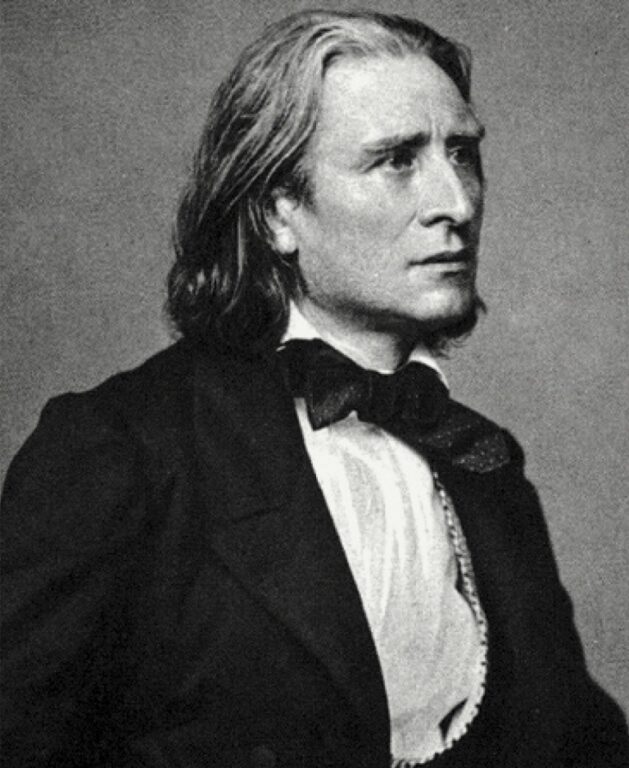
Franz Liszt · Romanticism
1811 – 1886
1846 - 1885 · Piano alone · Weimar and other cities
Tonality
Without a unique tone. It's nineteen rapsodies and each has his own. The most famous, # 2, is in less.
From the atril
Liszt was born in Hungary, although he was raised and lived almost always outside of it, and felt a strong link to his native land. In his nineteen Hungarian rapsodies he recreated the music played by the bands of Zingaran musicians, which he believed the authentic Hungarian popular music. Today we know it was a more recent urban style, but that doesn't subtract anything from these works full of fire.
I can INTEREST you.

Most follow the scheme of Hungarian dance: a slow first part, the lassan, dark and full of ornaments, like an improvisation of violinist, and a second quick, friska, to speed up to the frenzy. From the keyboard, you have to imitate the instruments of the bands: the cymbals of the cymbals, the glissans of the violin, the rhythms marked. # 2 is the most famous, with its dizzy end. They are pieces that demand virtuosism, but above all character and freedom.
What to hear
- Rapsodia # 2, the most famous.
- The contrast between the lassan and friska.
- The trumolos that imitate the cymbale.
Listen
Franz Liszt - Rapsodia Hu ́ ngara No.2 - Symphony Orchestra of Chiapas · Tristain2009
When you press the YouTube player will be loaded.

