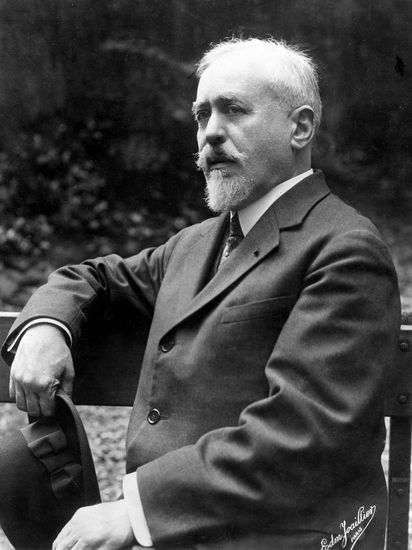
Paul Dukas · Impressionism
1865 – 1935
1912 · Danzado poem · Paris
Tonality
Without a unique tone. Like all ballet, he goes through a lot of tonalities. It is preceded by a brief and brilliant metal fanfare.
From the atril
La Peri, released in Paris in 1912, was the last great work that Dukas left published; then, his relentless self-criticism led him to destroy almost everything he composed. It's a «Danzado poem» based on a Persian legend: Prince Iskender, in search of immortality, finds a peri, a fairy, asleep with the flower of eternal life in his hand, and snatches it away.
To recover the flower, the peri dances before the prince a dance of seduction. Iskender, captivated, returns it, and she disappears in the light as he understands that his end is coming. Dukas writes a music of very refined and sensual colors, with a transparent orchestration and rich harmony, close to the world of Debussy and Ravel but with a stronger architecture. Before the work is played almost always the Fanfarria, a short piece for metals that Dukas added for the public to shut up before it started, and which today is one of the most touched by the metal wind sections of the world.
What to hear
- The Fanfarria for metals.
- The seduction dance of the peri.
- The final disappearance in the light.
Listen
Dukas: La Peri - Fanfare − hr-Sinfonieorchester − Marie Jacquot · hr-Sinfonieorchester - Frankfurt Radio Symphony
When you press the YouTube player will be loaded.

