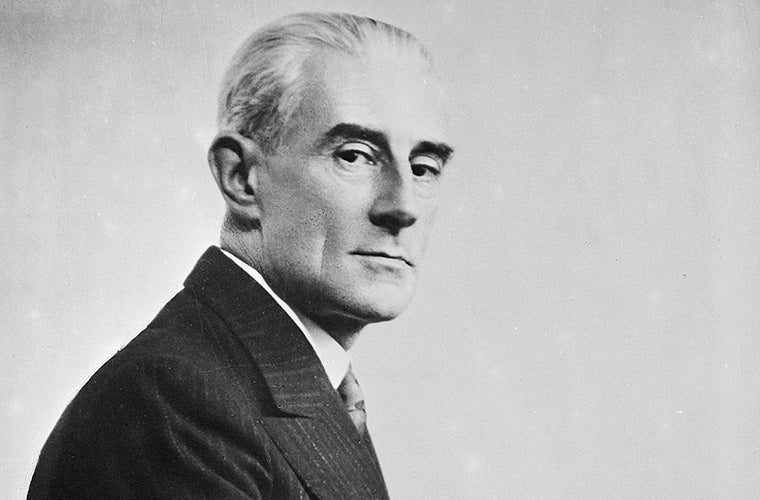
Maurice Ravel · Impressionism
1875 – 1937
1899 · orchestrated in 1910 · Piano and orchestra · Paris
Tonality
From the atril
The Pavane pour une infante défunte («Pavana for a dead child»), written for piano in 1899 when Ravel was still a student, became immediately enormously popular. He orchestrated it himself in 1910. The title does not refer to any specific infamous: Ravel explained that he liked the sound of the words and that he evoked a pavana that a little princess would have been able to dance in the Spanish court painted by Velázquez.
It is a slow and serene piece of elegant melancholy, with a noble melody that is repeated three times with small variations, separated by episodes of delicate harmonies. In the orchestral version, the melody is sung by the trumpet, one of the most famous and feared solos of the repertoire, because it requires absolute control in a soft and exposed record. Over the years, Ravel came to judge her hard, criticizing her form. «too poor»But the public never stopped loving her. His difficulty lies in simplicity: it must be touched calmly, without sentimentalism.
What to hear
- The tube solo of the orchestral version.
- The melody that returns three times.
- The original piano version.

