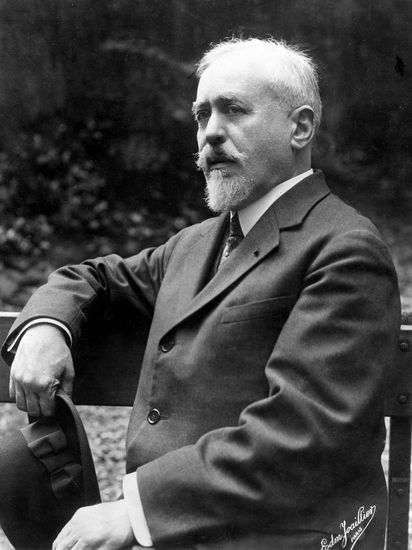
Paul Dukas · Impressionism
1865 – 1935
1907 · Opera · Paris
Tonality
Without a unique tone. Like every opera, he goes through a lot of tonalities throughout his scenes.
From the atril
Ariane et Barbe-bleue, premiered at the Opéra-Comique de Paris in 1907, is the only opera by Dukas, on a text by Maurice Maeterlinck, the same author of the Pelléas et Mélisande Debussy. Dukas worked on it for years, and the result is one of the great French operas of his time.
Ariane, the new wife of Bamba Azul, disobeys and opens the forbidden doors of the castle. After each one there is a treasure of precious stones (amethysts, sapphire, pearls, emeralds, ruby, diamonds) and Dukas gives each one an orchestral color of his own, in a dazzling scene. Then he discovers the old wives locked up, including a call Mélisande, wink at Debussy, and releases them. But in the end, when Ariane leaves, they prefer to keep their jailer. It's an opera about freedom and the fear of exercising it. The orchestration is sumptuous and the role of Ariane, huge and demanding. Messiaen, his student, admired her deeply.
What to hear
- The scene of the six doors and their precious stones.
- The release of the old wives.
- The end, where Ariane leaves alone.
Listen
Paul Dukas - Ariane et Barbe-bleue · Classical Gems
When you press the YouTube player will be loaded.

