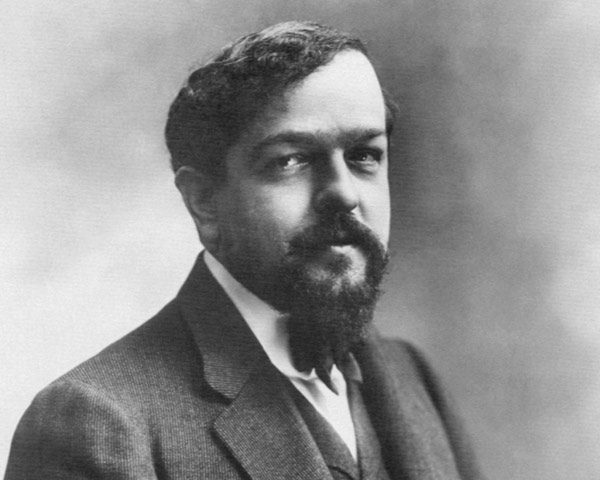
Claude Debussy · Impressionism
1862 – 1918
1899 · Orchestra and female choir · Paris
Tonality
Without a unique tone. They are three pieces and each has its own harmonic, often modal color.
From the atril
The title does not refer to the pianist night of Chopin, but to the paintings of James Whistler, who thus called his studies of light and color. Debussy explained that he was interested. «printing and special lights» that the word suggests. There are three pieces: Nuages (Nubs), Fêtes (Festivals) and Sirènes (Sirens), which adds a chorus of women's voices without text.
Since the orchestra, every piece is a world. In Nuages, clarings and flashes draw a slow figure that passes like grey clouds, and an English corno launches a melancholic call that returns again and again. Fêtes It is pure light and movement, with a procession that approaches from afar with trumpets with satico and grows to explode. In Sirènes, the voices of the choir are founded with the orchestra as one more wave of the sea, a magical effect that requires perfect tuning.
What to hear
- The call of the English corno in Nuages.
- The procession approaching in Fêtes.
- The choir without words of Sirènes.
Listen
Debussy - Trois Nocturnes (Vienna Philharmonic, Pierre Boulez) · EuroArtsChannel
When you press the YouTube player will be loaded.

