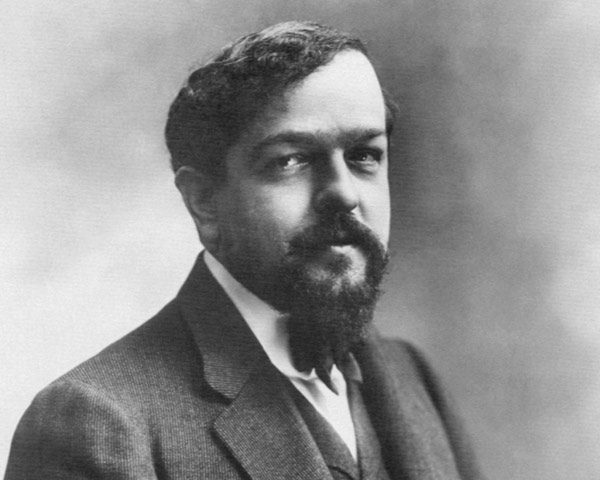
Claude Debussy · Impressionism
1862 – 1918
1902 · Opera · Opéra-Comique, Paris
Tonality
Without a unique tone. Like every opera, it goes through many tonalities, with a smooth harmony that avoids traditional resolutions.
From the atril
Debussy worked almost ten years in this opera, the only one that ended, on Maurice Maeterlinck's symbolist drama. The story is simple and mysterious: Prince Golaud finds in the forest Mélisande, a lost young woman, and marries her; she and her half-brother Pelléas fall in love, and Golaud's jealousy leads to tragedy. Everything is wrapped in darkness, in a kingdom where the sun hardly ever shines.
From the pit, it is one of the most extraordinary operas that can be touched, because the orchestra is almost never imposed: the singers recite the text with the naturality of the word spoken, without great arias, and the orchestra wraps its words in changing colors. The interlude between scenes, however, are moments when the orchestra breathes and unfolds all its color. The scene of the tower, in which Mélisande drops its long hair on Pelléas, is of an unforgettable contained sensuality.
What to hear
- The natural claim of the singers.
- The orchestral interluds between scenes.
- The scene of the tower and the hair of Mélisande.

