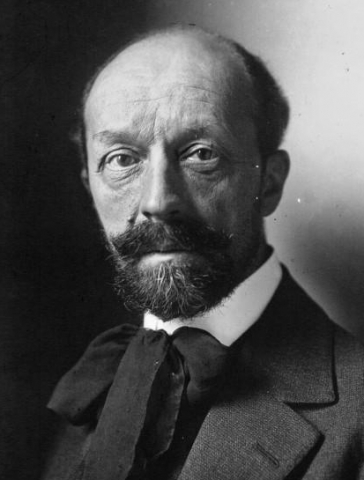
Albert Roussel · Impressionism
1869 – 1937
1930 · Ballet · Paris Opera, 1931
Tonality
Without a unique tone. Like all ballet, it runs a lot of tonalities along its numbers.
From the atril
Roussel wrote this ballet for the Paris Opera, where it premiered in 1931 with the choreography of Serge Lifar. The myth is that of Ariadna, abandoned by Theseus on the island of Naxos, who wakes up to meet Bacus, the wine god, and joins him and his baccalaureate court at a dionysian feast. Today it is played mainly in concert, in the form of two suites, and the second is the most famous.
For an orchestra, the second suite is a physical challenge and a huge pleasure. It begins with the awakening of Ariadna, a very French sensuality, through the dance of Ariadna and that of Baco and Ariadna, and ends in an unbridled bacanal, with irregular rhythms, atroning metals and a percussion that does not give a truce. It is Roussel in pure state: an impressionist color at the service of a rhythmic energy that reminds Stravinski.
What to hear
- Ariadna's awakening, sensual and bright.
- The dance of Baco and Ariadna.
- The final bacanal, with its rolling rhythm.

