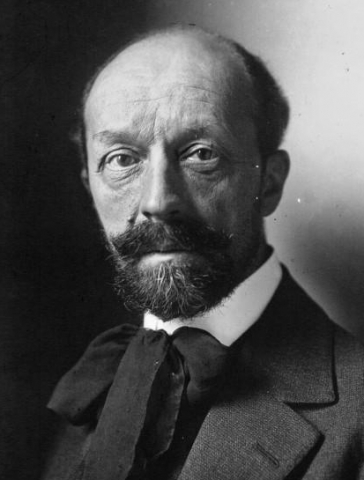
Albert Roussel · Impressionism
1869 – 1937
1930 · Symphony in smaller sun · Boston
Tonality
From the atril
To celebrate the fifty years of the Boston Symphony Orchestra, Koussevitzky commissioned works to the great composers of the moment: of that order were born, among others, the Symphony of the Psalms by Stravinski and this third by Roussel, premiered in 1930. It is its most famous symphony and one of the best French symphonies of the 20th century.
From the first bar, the orchestra is a machine: a rhythm hammered on the rope and the percussion on which the metals throw a five-note motif that verters the whole work. The adagio is serious and deep, with a climax of great intensity, and the scherzo, a light waltz and something ironic. The end, energetic and bright, ends up remembering that initial motif in an almost tender tone. For musicians it is a rhythmically demanding symphony, but very grateful: everything sounds compact, clear and with nerve.
What to hear
- The five-note motive that unifies the symphony.
- The climax of adagio.
- The light waltz-shaped scherzo.
Listen
Roussel: Symphony No.3 G minor Op.42 - Charles Olivieri Munroe, Bucharest Philharmonic Orchestra · ClassicalMusic Video
When you press the YouTube player will be loaded.

