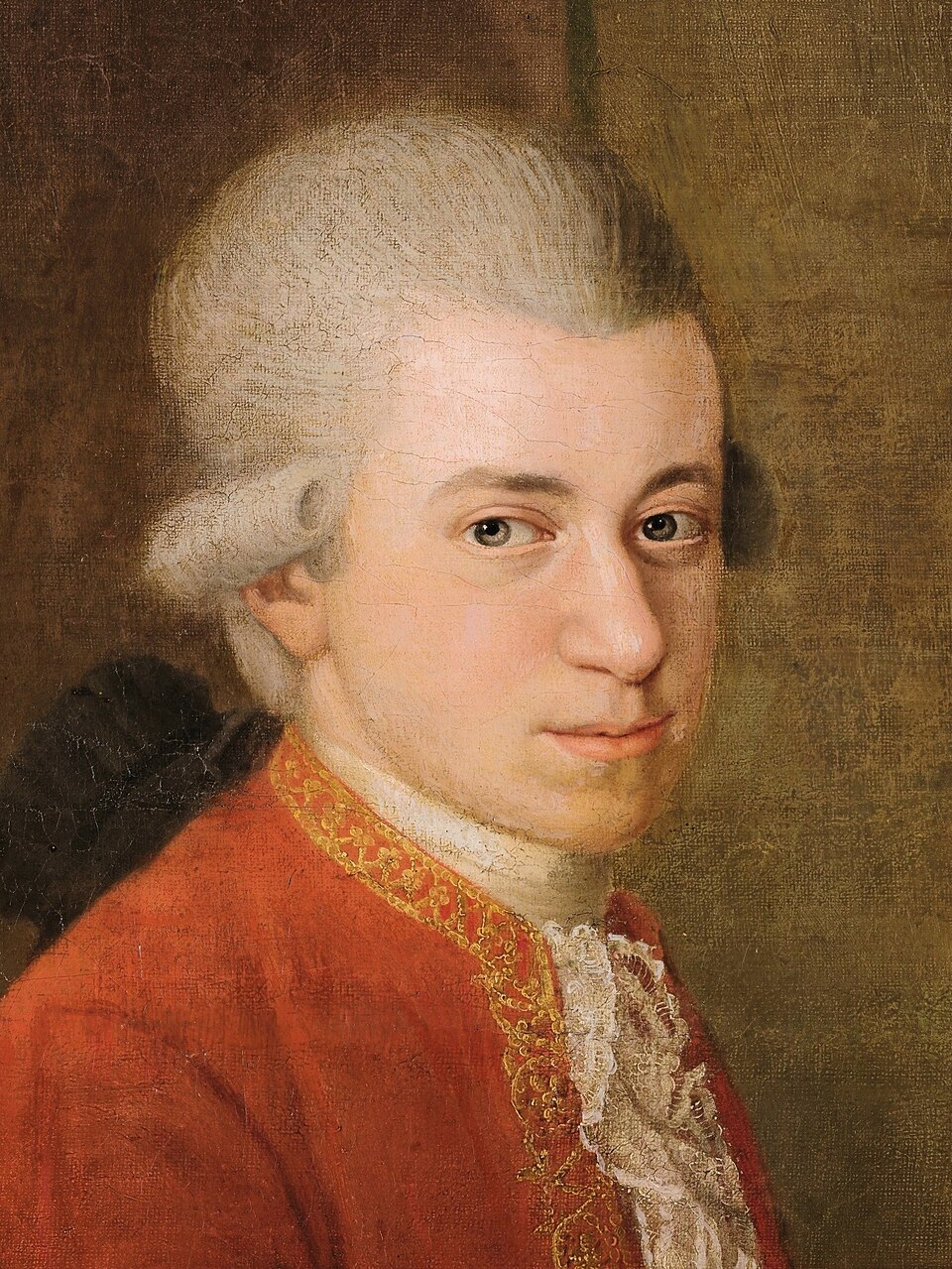
Wolfgang Amadeus Mozart · Classification
1756 – 1791
1788 · Symphony · Vienna
Tonality
Minor sun, one of the only two symphonies of Mozart in minor mode, along with No. 25.
Instruments
- Flute
- 2 oboes
- 2 clarinet (added by Mozart in the second version)
- 2 fages
- 2 tubes
- Rope (violins, violas, cello and contrabajes)
From the atril
In the summer of 1788, in just six weeks, Mozart composed his last three symphonies: # 39, # 40 and # 41. It was then a time of economic difficulties, and it is not known for certain what concerts he wrote them for. Symphony No. 40 in the lower sun is one of the only two symphonies of Mozart in a minor tone, and its passionate and restless character makes it unique.
The beginning is unforgettable: without introduction, the violins begin an agitated and sighing theme, on a palpiting accompaniment of the violas, like an accelerated heart. The whole play keeps that tension. The walker, in my major bemol, is more serene, but is driven by chromatic concerns. The minuet, rather than being an elegant dance, is rough and energetic, with displaced rhythms, and only its trio offers a moment of pastoral calm. The end is taken away, with a development of a surprising harmonic audacity. Mozart then made a second version by adding clarinet. It's one of the most loved symphonies in the repertoire.
What to hear
- The agitated theme of the beginning.
- The rough minuet and its pastoral trio.
- The harmonic audacity of the end.

