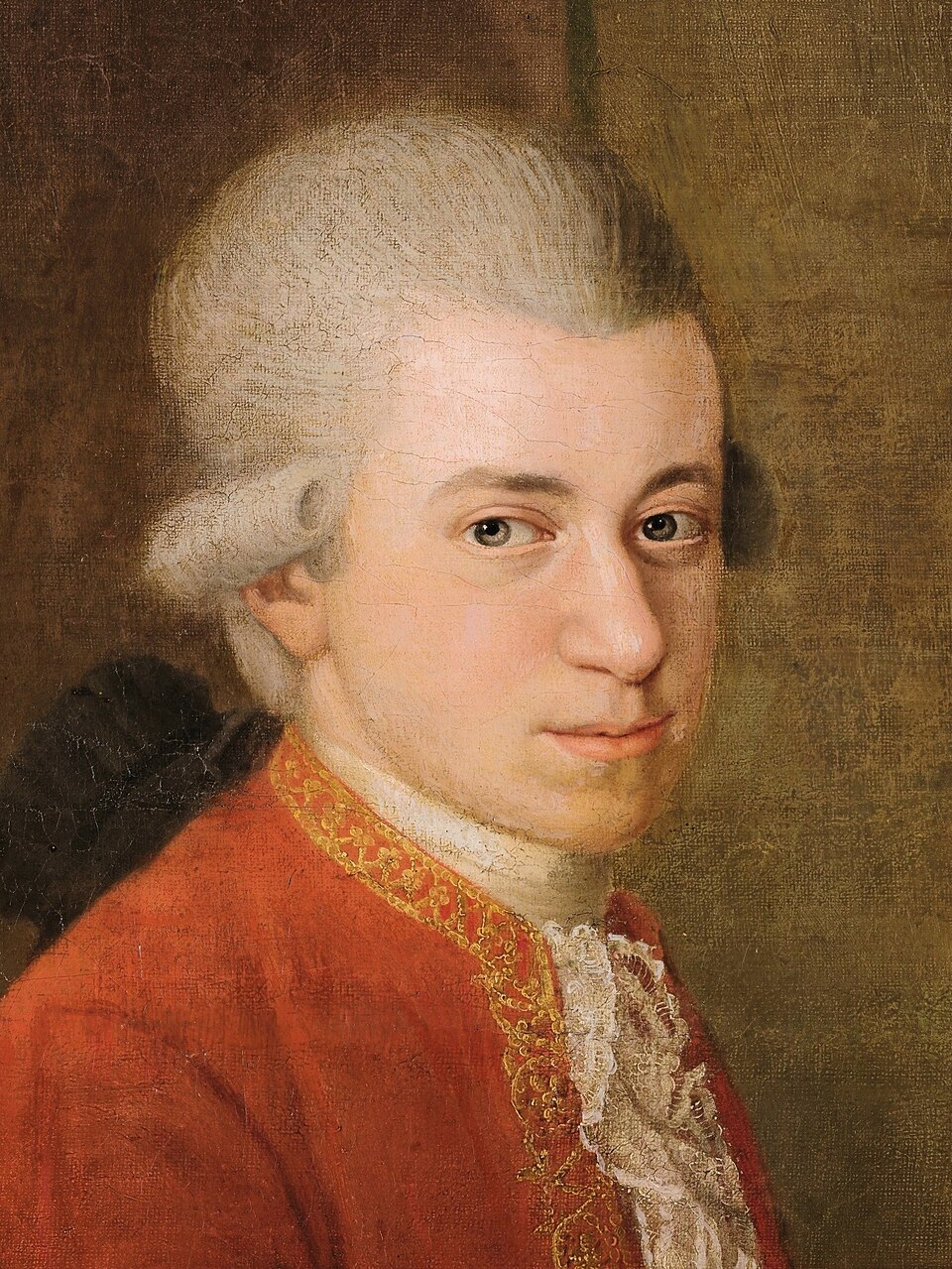
Wolfgang Amadeus Mozart · Classification
1756 – 1791
1791 · Mass of the deceased · Vienna
Tonality
Instruments
- 2 corni di bassetto
- 2 fages
- 2 trumpets and timbals
- 3 thrombons (high, tenor and low)
- Rope (violins, violas, cello and contrabajes)
- Body (continuous)
From the atril
In the summer of 1791, an anonymous messenger sent Mozart a mass of réquiem. Today we know that he was acting on behalf of Count Franz von Walsegg, who wanted her to pass as his own in memory of his wife. Mozart, busy with The magic flute and another opera, he worked on it in his last months, becoming more and more ill, and died in December 1791 leaving it unfinished. The romantic legend of a réquiem written for his own death was born very soon.
His widow, Constanze, needed to charge the commission and asked several students to complete the work; the best known version is that of Franz Xaver Süssmayr. Mozart only finished the Intro; of the rest he wrote the voices and some instrumental indications, and the «Lacrimosa» is interrupted after eight bars. The music is of an extraordinary dramatic intensity: the darkness of the beginning, with the corni di bassetto and the fages, the double escape of the «Kyrie», the terror of «Dies irae», «Rex tremendae», «Confutatis» and the desolation of «Lacrimosa». It is one of the most impressive works in the history of music.
What to hear
- The Intro, the only move Mozart finished.
- The «Dies irae» and «Confutatis».
- The eight bars of Mozart «Lacrimosa».
Listen
Mozart: Requiem · France Musique concerts
When you press the YouTube player will be loaded.

