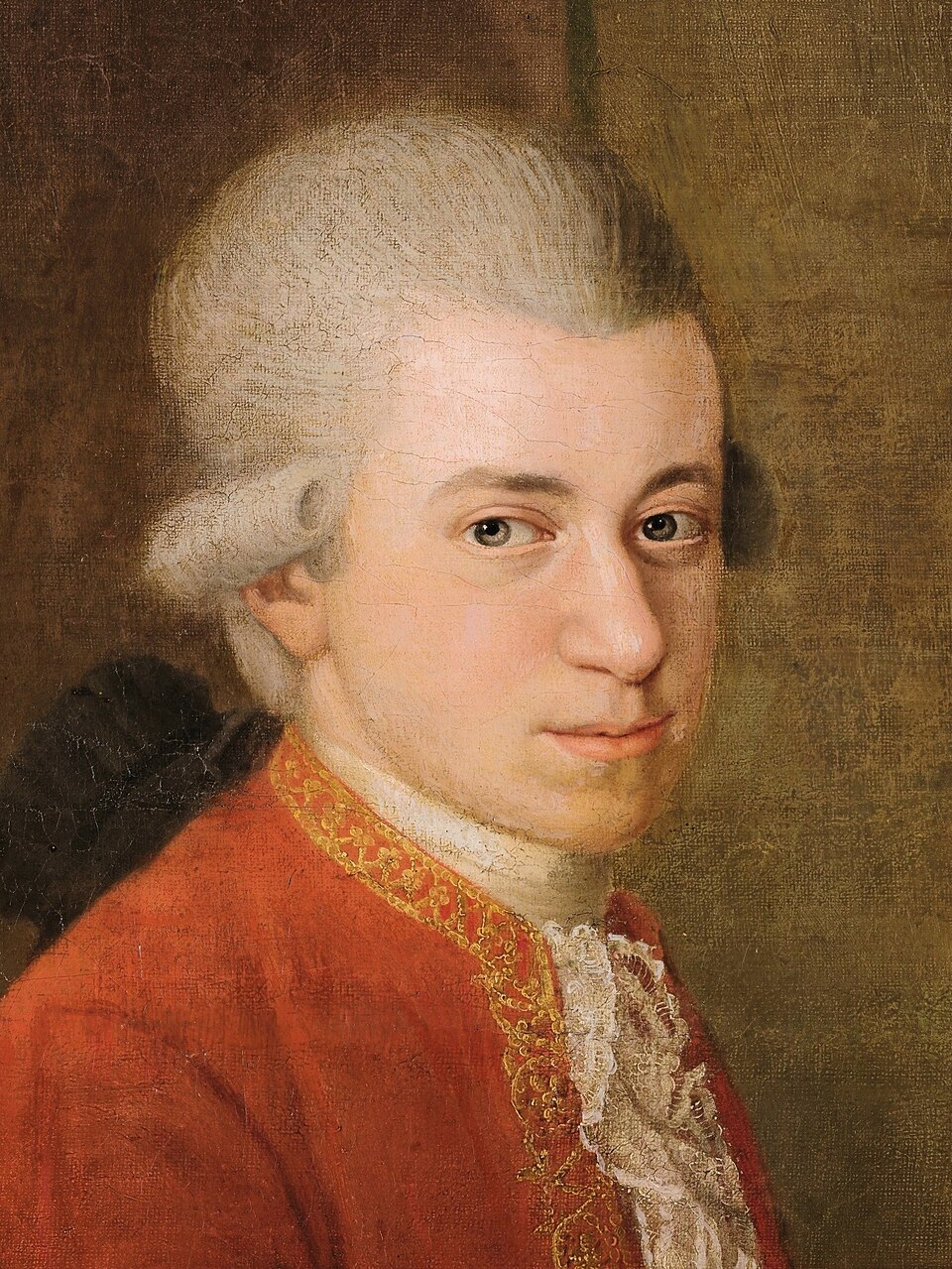
Wolfgang Amadeus Mozart · Classification
1756 – 1791
1787 · Dramma giocosus · Prague
Tonality
Without a unique tone. Like every opera, it goes through a lot of tonalities. The overture begins in r minor, the tone of the final scene with the Comendator, and continues in major.
Instruments
- 2 flutes
- 2 oboes
- 2 clarings
- 2 fages
- 2 tubes
- 2 trumpets and timbals
- 3 thrombons (at the Comendator scene)
- Mandoline (in serenade) «Deh, vieni alla finestra»)
- Rope (violins, violas, cello and contrabajes)
- Small orchestras on stage (at the dance of the first act and at the final dinner)
- Continuous for the recites (key or fortepiano)
From the atril
After the huge success of The wedding of Figaro In Prague, the city theatre commissioned Mozart a new opera. With Da Ponte he chose the legend of the mockery, which goes back to The mockery of Seville from Tirso de Molina. Don Giovanni It was released in Prague in October 1787; according to tradition, Mozart wrote the oberture the night before the premiere.
The play mixes comedy and tragedy, what Da Ponte called «giocosal drama». Don Giovanni, an unscrupulous seducer, kills the Comendator at the beginning of the opera and spends the rest making fun of everyone: of Doña Anna, of Doña Elvira, of the peasant Zerlina. His servant Leporello, in the «Catalogue», lists with humor their achievements by countries, including «thousand and three» in Spain. In the end, the statue of the Comendator goes to dinner with him and takes him to hell, in a scene of a shaking force, with the thrombons and the dark chords already heard in the overture. It's for many the best opera ever.
What to hear
- The «Catalogue» Leporello.
- The duo «Là ci darem la mano».
- The appearance of the statue of the Comendator.
Listen
Wolfgang Amadeus Mozart - Don Giovanni, K. 527 (full vocal score) · headgear
When you press the YouTube player will be loaded.

