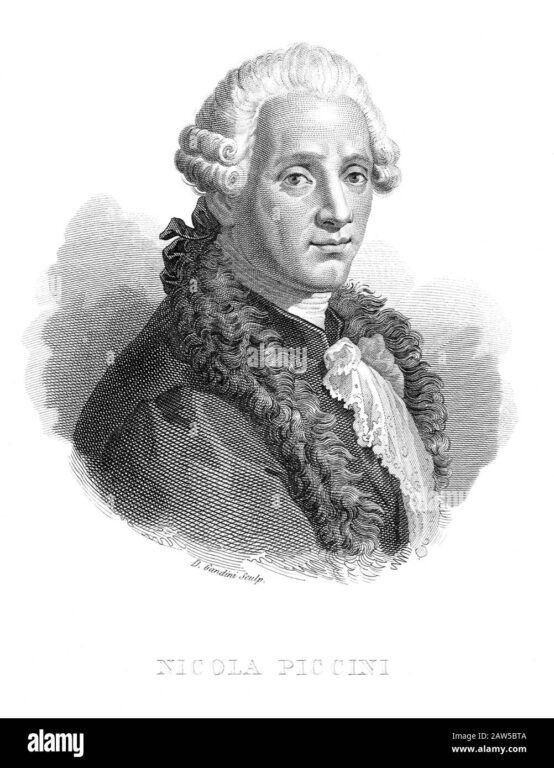
Niccolo Piccinni · Classification
1728 – 1800
1760 · Comic opera · Rome
Tonality
Without a unique tone. Like every opera, it goes through many tonalities along its ari and ensembles.
From the atril
La Cecchina, ossia La buona figliuola, released in Rome in 1760, was one of the greatest operational successes of the 18th century. Carlo Goldoni's libretto, inspired by the novel Pamela of Richardson, tells the story of Cecchina, a humble gardener in love with his lord, the Marquis, and him. After many entanglement, it is discovered that she is actually the daughter of a baron, and the wedding can be held. The opera was represented throughout Europe, from London to St. Petersburg, and gave rise to fashion of dresses and hairstyles «to the Cecchina».
His novelty was to mix comedy with feeling: Cecchina is not a rogue maid, but a tender heroin that makes the public cry, in a genre called sentimental comedy. Piccinni writes for her aria of a touching sweetness, as «A boulder ragazza», and he counteracts the comic characters, with his fast chatter. The long and chained end of the act, in which the action advances as everyone sings, the Mozart's are announced. For today's listener, it is a fresh and charming opera, and a key piece to understand where it comes from The wedding of Figaro.
What to hear
- Cecchina's tender cherries.
- The contrast with the comic characters.
- The end of the act in chains.
Listen
La CECCHINA ossia la BUONA FIGLIOLA di NICCOLO 'PICCINNI (1728-1800) dramma giososo di Carlo Goldoni · Vito Paternoster
When you press the YouTube player will be loaded.

