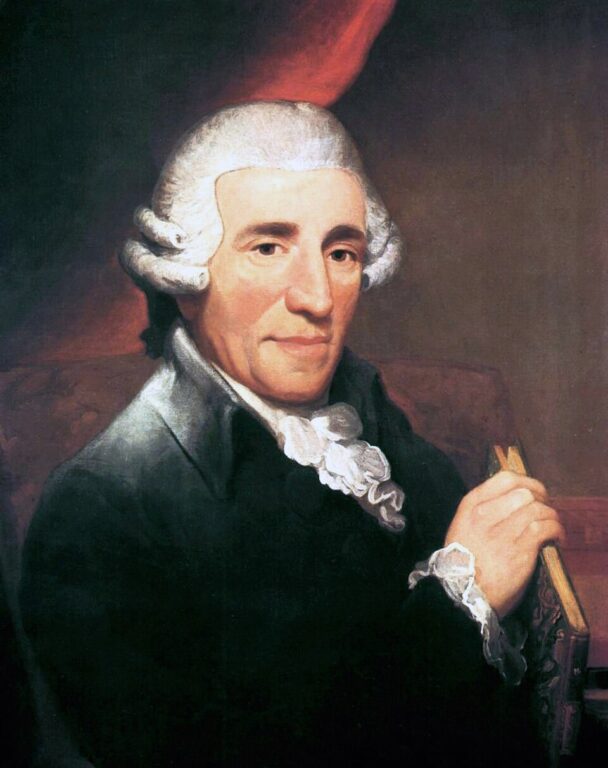
Joseph Haydn · Classification
1732 – 1809
1772 · Symphony · Esterháza
Tonality
Less sustained Fa, a very unusual tone at the time. The final adagio, in which musicians are leaving the stage, ends in major sustained.
Instruments
- 2 oboes
- Fagot
- 2 tubes
- Rope (violins, violas, cello and contrabajes)
From the atril
In the summer of 1772, Prince Nicolás Esterházy extended the court's stay in his palace in Esterháza more than expected, and the musicians, who could not take their families, were looking forward to coming home. Haydn found an ingenious and discreet way of transmitting the message: a symphony in which, in the last movement, the musicians rise one by one, turn off their candle and leave the stage, until only two violins remain. The prince understood the indirect and the next day the court returned.
Beyond the anecdote, it is one of Haydn's most bold symphonies. It is in a minor sustained fa, a very rare tonality at the time, and its first movement, from the Sturm und Drang stage, is agitated and tense. The end begins as a normal presto, but is interrupted to give way to an adagio in which the orchestra fades away. Playing it live, with the scene of the goodbyes, is always a special moment for musicians and the public.
What to hear
- The first move, agitated and tense.
- The presto that is interrupted.
- The final adagio, with the orchestra fading away.

