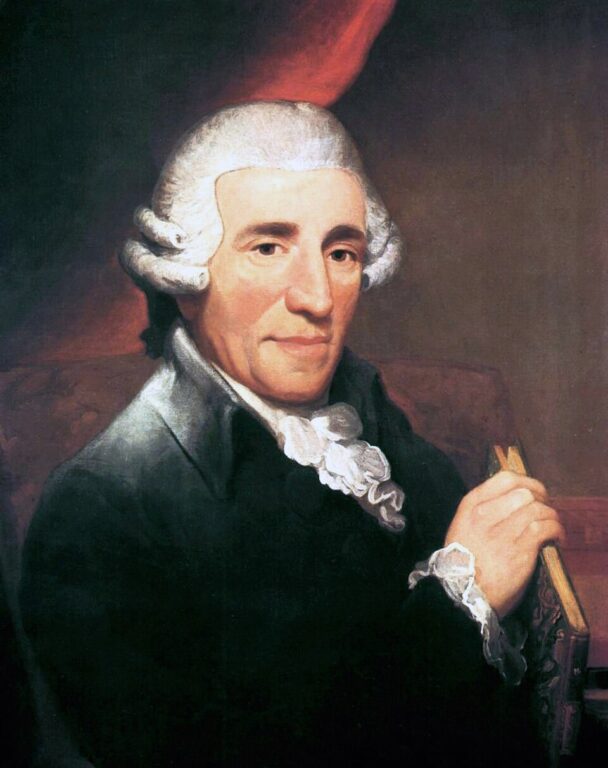
Joseph Haydn · Classification
1732 – 1809
1801 · Oratory · Vienna
Tonality
Without a unique tone. Like all oratoriums, it goes through many tonalities along its four parts, one per station.
Instruments
- Flutes and flautin
- 2 oboes
- 2 clarings
- 2 fages and contrafagot
- Thrombas and trumpets
- 3 thrombons
- Timbals, triangle and tambourine
- Rope (violins, violas, cello and contrabajes)
- Continuous for the recites (fortepiano)
From the atril
After the success of The CreationBaron van Swieten convinced Haydn to write another oratory, this time about a poem by Scotch James Thomson describing the cycle of the year in the field. The stations, released in 1801, was Haydn's last great work, who confessed that the effort had left it exhausted.
Unlike The CreationThere are not angels here, but three peasants (Simon, Hanne and Luke) who live in spring, summer, autumn and winter. Haydn has fun painting nature: plow, summer storm, a trump hunt, a harvest with collective drunkard included, the cold winter and the yawns by the fire. He himself complained of having to imitate the croar of the frogs. The oratory is more earthly and full of humor than The Creationbut ends with a reflection on the passage of life and a great final choir.
What to hear
- The summer storm.
- I was hunting it with tubes and the harvest party.
- The final choir.
Listen
'The Stations' (Part 2) - Franz Joseph Haydn - Dir. Jan Willem de Vriend - OSyCRTVE · Symphony Orchestra and RTVE Choir
When you press the YouTube player will be loaded.

