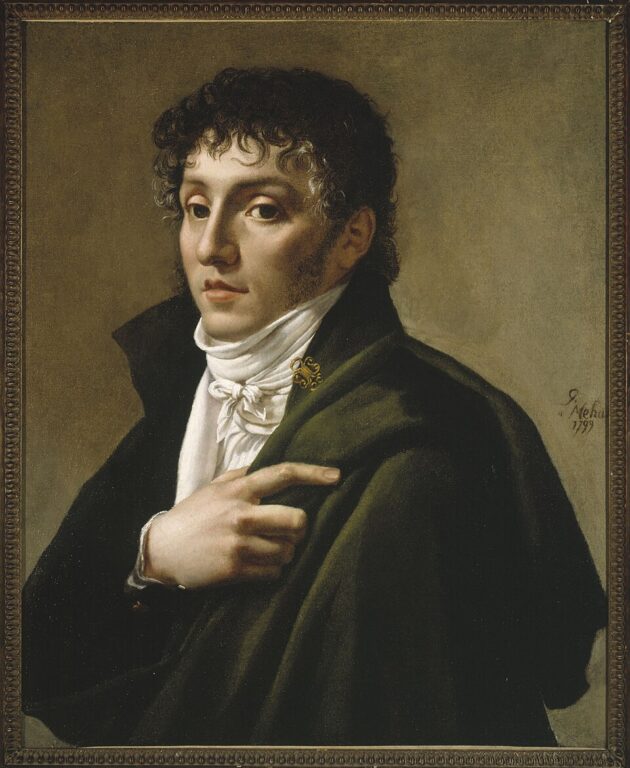
He-Nicolas Méhul · Classification
1763 – 1817
1792 · Comédie hédiïque en un actuo · Paris
Tonality
Without a unique tone. Like all opéra- comique, it runs a lot of tonalities along its arias and ensembles.
From the atril
History comes from Antiquity: Prince Antioco languishes from a mysterious disease, and the Erasmus doctor discovers that the cause is his secret love for Stratonice, the young fiancée of his own father, King Seleuco. In the end, the king renounces her for the love of his son. It is a short work, in one act, that was very popular for years in Paris.
From the orchestra, what is most striking is the sobriety and intensity of language, very influenced by Gluck. The Aia of Antioco, Versez tous vos chagrinsIn which the prince confesses his pain, he was one of the most famous of his time, and the ensembles have a great dramatic force. The overture is severe and expressive. For the modern listener, it is a good example of how the French opera of the revolutionary era sought emotional truth above light.
What to hear
- The overture, severe and expressive.
- The Aia of Antioco, Versez tous vos chagrins.
- Gluck's influence on the claim.

