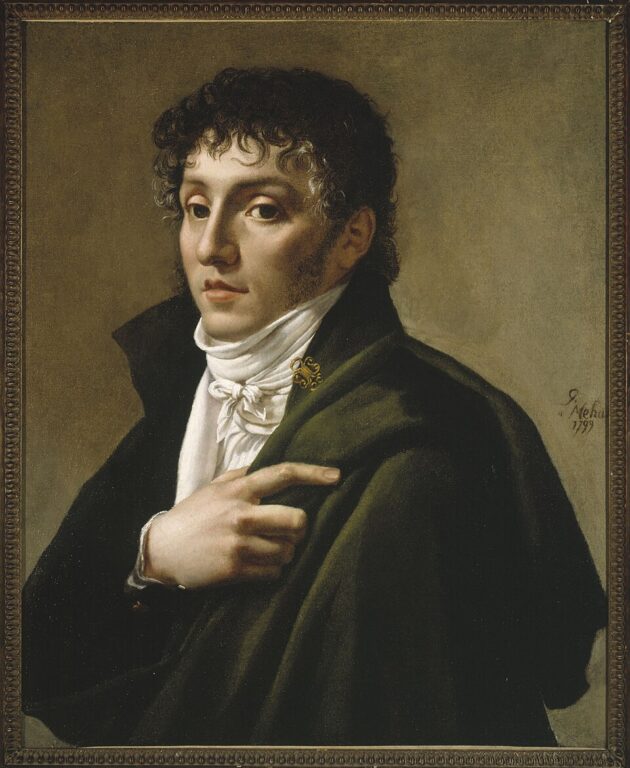
He-Nicolas Méhul · Classification
1763 – 1817
1794 · Chorus and orchestra hymn · Paris
Tonality
No tonality indicated in the title. It is a revolutionary anthem in stanza, designed to be sung in mass.
From the atril
With text from the poet Marie- Joseph Chénier, the «Song of the game» was composed in 1794 to celebrate the anniversary of the Bastille. His success was so great that he was called «the brother of The Marshal»and under Napoleon came to replace it as an official anthem. Today it is still played in military ceremonies and official events in France.
From the orchestra, it is a piece built as a small dramatic scene: each stanza is sung by a different character, a mother, some old people, a boy, some wives, some girls, some warriors, and they all respond with a strong coral stribble. The melody is simple and martial, easy to sing for a crowd, but it has a nobility that the difference from other hymns of the time. It's music made to unite a town, and it's noticed in every bar.
What to hear
- The coral, energetic and martial chorus.
- Strokes sung by different characters.
- The simplicity thought to be sung by crowds.
Listen
Etienne Nicolas Méhul - Le Chant Du Départ · NH
When you press the YouTube player will be loaded.

