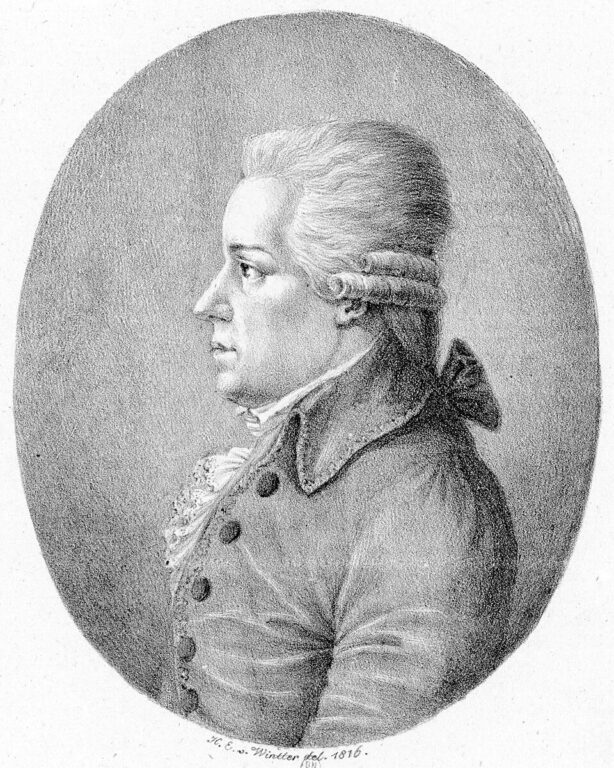
Carl Ditters von Dittersdorf · Classification
1739 – 1799
1785 - 1786 · Programme symphonies · Vienna
Tonality
Without a unique tone. Each symphony narrates a different metamorphosis and has its own tonality.
From the atril
Dittersdorf conceived twelve symphonies, each inspired by an episode of the Metamorphosis of the Latin poet Ovidio, and six complete ones are preserved. Each movement describes a moment in history: the four ages of the world, the fall of Faeton, the transformation of Acteon into deer, the peasants turned into frogs... Half a century before Berlioz, is one of the first great examples of orchestral music with program.
Tapping them is very fun, because Dittersdorf has a great sense of humor and sound image. In the symphony of the peasants, who mock the goddess Latona and are turned into frogs, the orchestra imitates the croar with repeated figures on the woods and the rope. In the Faeton, which loses control of the Sun's car, the music goes off. Behind the anecdote are classic symphonies of great trade, with the elegance of the best Viennese style.
What to hear
- The croar of the frogs in the symphony of the peasant licites.
- The fall of Faeton, with the orchestra barefoot.
- The transformation of Acteon into a deer.

