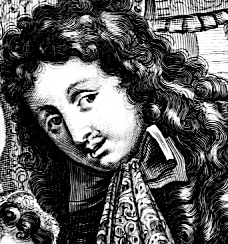
Marc-Antoine Charpentier · Baroque
1643 – 1704
Decades from 1670 to 1690 · Music for Easter · Paris
Tonality
Without a unique tone. Charpentier wrote numerous lessons and each has its own center, within a general climate to a lesser way.
Instruments
- Continuous bass (organ or key, with viola da gamba)
- In some lessons, two sharp instruments (violins or flutes)
From the atril
The «lessons of darkness» were a typical genus of the 17th century France: pieces for the offices of the Maitines of Thursday, Friday and Holy Saturday, on the Latitudes of the prophet Jeremiah for the destruction of Jerusalem. They were called that because, during the trade, they were going to turn off one by one the candles of the church until it was dark. Charpentier wrote over thirty, the largest collection of the genus.
They are written for one, two or three voices with continuous bass, sometimes with instruments, and combine the French decline with the expressive intensity that Charpentier learned in Italy. One of its particularities is the Hebrew letters that lead each verse («Aleph», «Beth.», «Ghimel»), which the composers turned into small vocalizations decorated with great beauty. The painful disonances and the chromatism express the pain of the destroyed city. It is intimate music, of a deep spirituality, ideal for a voice that can rub with sobriety and emotion.
What to hear
- The vocalizations on the Hebrew letters.
- The painful dissonances.
- The saying of the voice over the continuum.

