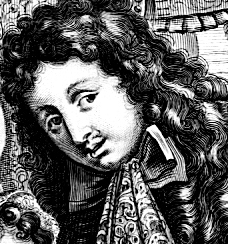
Marc-Antoine Charpentier · Baroque
1643 – 1704
1688 · Sage Opera · Paris, Louis- le- Grand School
Tonality
Without a unique tone. Like all tragédie in musique, he goes through many tonalities along his scenes, dances and chorus.
Instruments
- Rope (violins, violas and bass)
- Flutes
- Continuous low
From the atril
David et Jonathan It premiered in 1688 at the Jesuit school of Louis- le- Grand in Paris, where the students represented each year a tragedy in Latin. Charpentier's opera was between the acts of that tragedy, Saülon the same biblical theme. It was the way to overcome Lully's monopoly: a work «school» and religious who, in practice, was a true opera.
The story is that of the friendship between David and Jonathan, the son of King Saul, who ends in tragedy when Jonathan dies in the battle against the Philistines. Charpentier writes a score of a remarkable intensity, with great warrior chorus, dances and, above all, scenes of deep emotion, such as David's lament for the death of his friend, one of the most touching pages of the French Baroque. There is also a disturbing scene of Endor's pitonism, which invokes Samuel's spectrum. Recovered in recent times, it has proved to be one of the great French operas of its century.
What to hear
- The scene of Endor's pitcher.
- The warrior chorus.
- David's lament for Jonathan.

