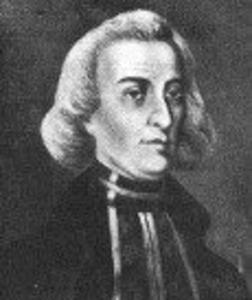
Juan Bautista Cabanilles · Baroque
1644 – 1712
Second half of the 17th century · Organ · Cathedral of Valencia
Tonality
Without a unique tone. The tients are written in the ecclesiastical tones, prior to the system of greater and minor tones, and each one has his own.
Instruments
- Iberian organ (with left and right-hand split records)
From the atril
Cabanilles was an organist of the Cathedral of Valencia for almost half a century and is the great figure of the Baroque Iberian organ, often called «the Spanish Bach». Of its abundant production, the most important part are the tientos: more than a hundred are preserved, the form par excellence of the Spanish organ.
The tiento is a counterpointed piece, related to the Italian ricercare, in which a theme is developed in imitation between the voices. Cabanilles gives you a huge variety: tients «full»with four equal voices; «medium-registration», which take advantage of a particularity of the Iberian organ, the broken keyboard, so that one hand plays as a soloist with a brilliant record while the other accompanies; tenths of contras, with long pedal notes. His language, with changes of compass, ternary rhythms and virtuous glosses, is unmistakably Spanish.
What to hear
- The half-record tients, with a latin soloist.
- The changes to the ternary.
- The sound of an Iberian historical organ.

