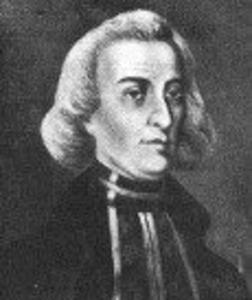
Juan Bautista Cabanilles · Baroque
1644 – 1712
Second half of the 17th century · Organ · Cathedral of Valencia
Tonality
No tonality in a modern sense. It is written in the ecclesiastical tones, and its name refers to the «false», the dissonances that go through it.
Instruments
- Iberian organ
From the atril
The «false» were, in the Spanish terminology of the time, the disonances. A stent of false is a slow and severe piece, built on a chain of disonances that are prepared and resolved, creating a continuous harmonic tension. It was played at a very concrete time of the Mass: during the elevation, when the priest raised the host.
It is the Spanish equivalent of the Italian toccata di durezze and ligature. Cabanilles leads this genre to an extraordinary degree of intensity: the voices move slowly, curling, with chromatism and suspensions that produce an almost mystical effect. It requires a smooth record, usually the flute, and a great sensitivity to hold the tension without hastening. Listened to in a cathedral, these tients have a hypnotic power.
What to hear
- The dissonances prepared and resolved.
- The smooth flute record.
- Mystic chromatism.

