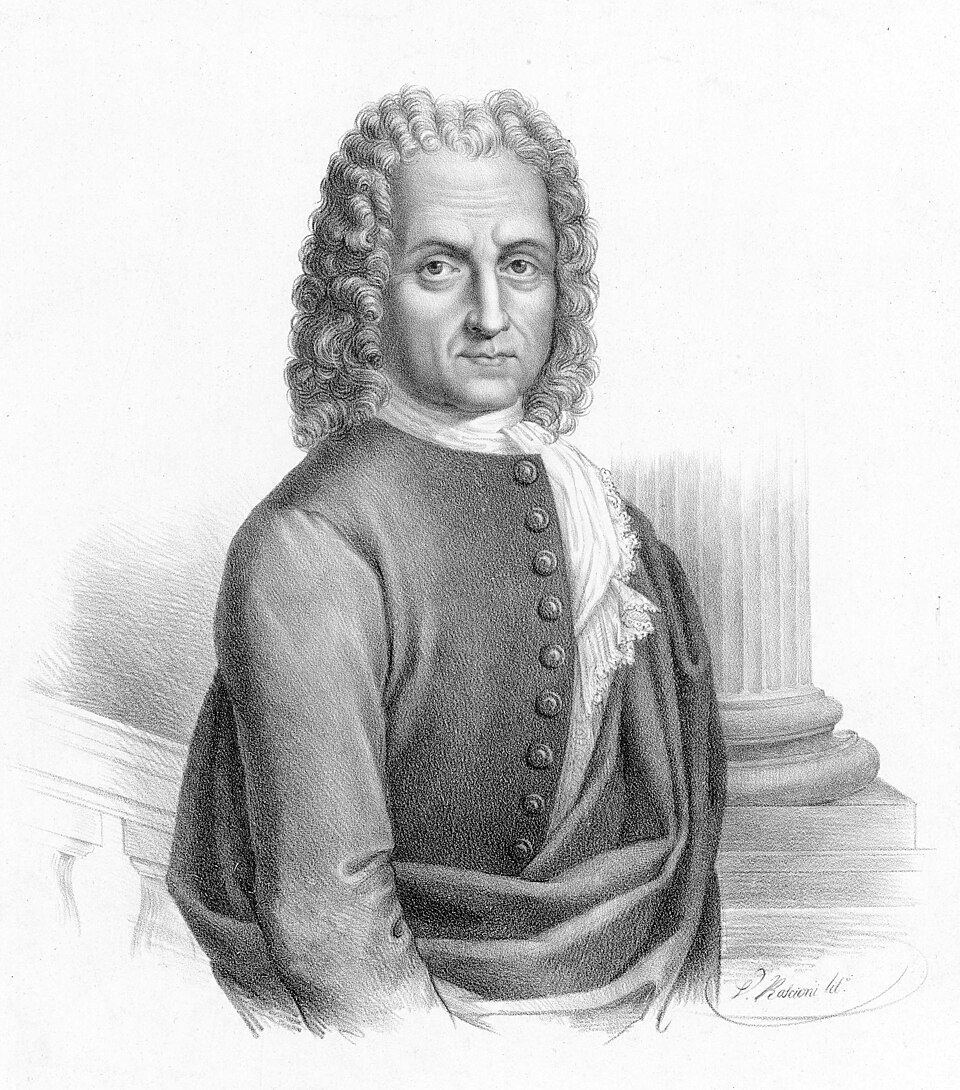
Benedetto Marcello · Baroque
1686 – 1739
1724 - 1726 · 50 psalms for 1 to 4 voices and continuous · Venice
Tonality
Without a unique tone. Gather fifty psalms and each has his own.
Instruments
- Continuous low
- In some psalms, binding rope instruments
From the atril
It is the work that gave Marcello lasting fame: eight volumes with the first fifty psalms in Italian paraphrase of the poet Girolamo Ascanio Giustiniani, for between one and four voices with continuous bass and sometimes forced cello. They were republished throughout the 18th century and translated into several languages; very later composers admired them as a model of sacred and simple music.
The most original is Marcello's curiosity about ancient music: in several psalms he introduced melodies he had scored in the synagogues of Venice, and also intonations he believed of Greek origin. When touching them, the continuum has to hold very clear vocal lines, often in strict counterpoint, and let the text be understood. There are moments of austerity that seems to look back, to Palestrina, and others of pure Venetian Baroque.
What to hear
- The psalms with melodies of the Venetian Jewish tradition, cited by Marcello himself.
- The forced cello parts, which weave a second thread under the voices.
- The contrast between the severe counterpoint passages and the most canable.
Listen
Benedetto Marcello (1686-1739): L'Estro Poetico-Armonico · calefone
When you press the YouTube player will be loaded.

