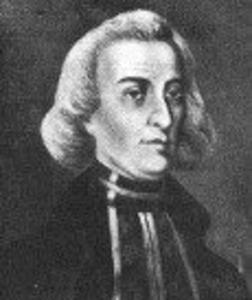
Juan Bautista Cabanilles · Baroque
1644 – 1712
Second half of the 17th century · Organ · Cathedral of Valencia
Tonality
Without a unique tone. They are several gallards, each in a different tone.
Instruments
- Iberian organ (or key)
From the atril
The rooster was a courtesan dance of the Renaissance, alive and saltarine, in a ternary compass. In the 17th century, he no longer danced, but his scheme continued to serve Iberian musicians as the basis for series of variations. Cabanilles wrote several, in which dance becomes an instrumental piece full of ingenuity.
On a repeated harmony, the variations occur with a contagious rhythmic energy: hemiolias that move the accent, syncups, figures in three-ways, glosses that walk the keyboard. It is the lighter and brightest face of Cabanilles, that of the organist who also knew how to amuse. They work very well to the organ, but they are also often heard to the key, where its danzable character highlights even more.
What to hear
- The hemiolias that play with the accent.
- virtuous glosses.
- The key version in front of the organ.
Listen
Gallardas IV del Qvinto Tono - Juan Bautista José Cabanilles. · Heriberto Raymundo Moreno Baeza
When you press the YouTube player will be loaded.

