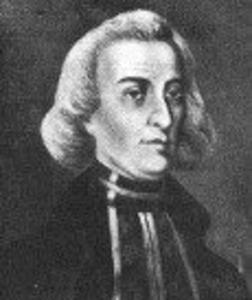
Juan Bautista Cabanilles · Baroque
1644 – 1712
Second half of the 17th century · Key · Valencia
Tonality
Without a unique tone. They are several dance pieces, each in a different tone.
Instruments
- Iberian organ (or key)
From the atril
The xácara (or jácara) was a Spanish popular song and dance, associated with the world of rogues and rufians, which was sung in the interacts of the Golden Century theatre. The current, on the other hand, was the Spanish version of the cohort, a fast dance in the calf. Cabanilles turned both into pieces of variations for key.
These works show how popular music impregnated the repertoire of a cathedral organist. The xatas have a disangry character, with marked rhythms and a simple and catchy harmony on which Cabanilles unfolds his invention. The currents are more elegant, with a fluid and continuous movement. Together with the biscuits and the passageways, they form a repertoire that sounds as good to the key as to the organ, and that reveals the nearest and most vital Cabanilles.
What to hear
- The popular and unangry air of the xatas.
- The fluidity of the currents.
- The variations on repeated harmonies.

