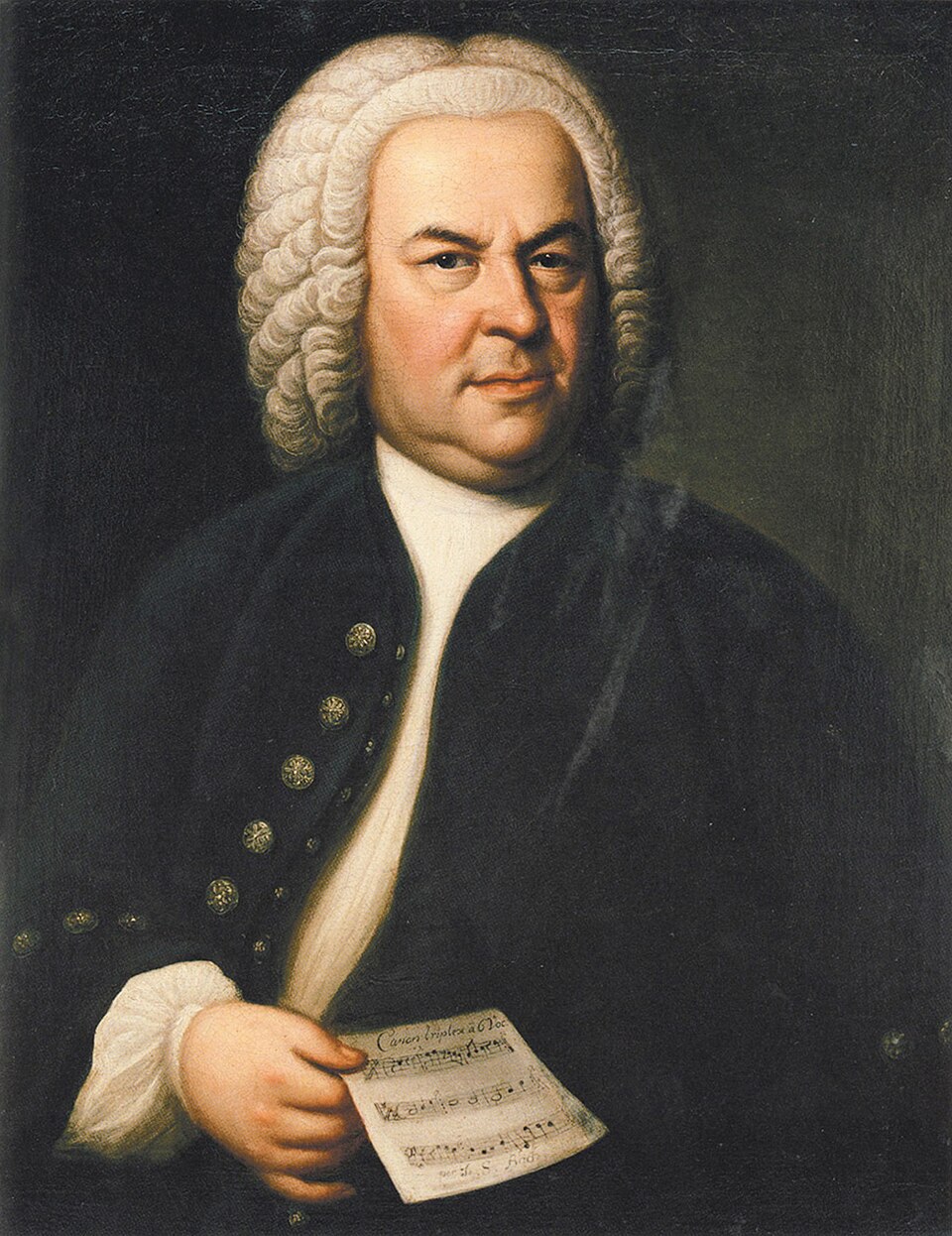
Johann Sebastian Bach · Baroque
1685 – 1750
1733 - 1749 · Mass · Leipzig and Dresden
Tonality
If less, although much of the mass is in major, the tonality of the trumpets, which dominates the Glory and the end.
Instruments
- 3 trumpets and timbals
- Hunting Trompa
- 2 cross flutes
- Oboes and oboes d'amore
- 2 fages
- Rope (violins, violes, cello)
- Continuous bass (organ and violone)
From the atril
It is paradoxical that the great Latin mass of history was written by a Lutheran, and that Bach never heard it complete. The Mass itself was formed for more than fifteen years: in 1733 he sent the Kyrie and the Glory to the Catholic court of Dresden, and in his last years he completed the rest, reusing and reproducing music from previous cantatas. It's his musical will.
The work is a synthesis of all the styles Bach dominated: the old counterpoint in the way of Palestrina in the «Creed in unum Deum», the Italian concerting glow in the «Gloria», with binding instruments, five, six and eight voices. The «Crucifixus», built on a repeated descending bass, leads to the Jubilee outbreak of «Et resurrexit»with trumpets and timbals. For a chorus it is a test of resistance and precision: the leaks are long, very acute for soprano and require enormous clarity.
What to hear
- The big chords of the initial Kyrie.
- The passage of «Crucifixus» to «Et resurrexit».
- The «Dona nobis pacem» end.

