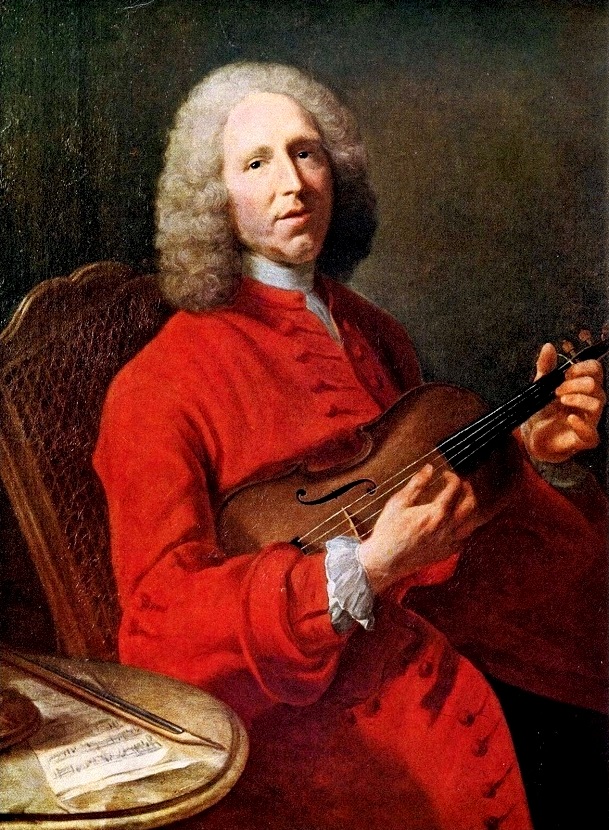
Jean- Philippe Rameau · Baroque
1683 – 1764
1739 · Tragédie en musique · Paris, Opera
Tonality
Without a unique tone. Like all tragédie in musique, he goes through many tonalities along his scenes, dances and chorus.
Instruments
- Rope (violins, violas and bass)
- Flutes, oboes and fages
- Continuous low (key)
From the atril
Dardanus It was released in 1739 with a libretto by Charles-Antoine Leclerc de La Bruère, who was very criticized for his unlikely plot, full of magicians, dreams and monsters. He tells how Dardano, the son of Jupiter, loves Iphise, the daughter of his enemy King Teucro. Rameau reviewed it deeply in 1744, redoing almost half of the work.
Despite its dramatic defects, the music is of the first order. The aria of Dárdano prisoner, «Lieux funestes», on an accompaniment of fagries and strings that go up and down painfully, it is one of Rameau's most intense pages. Iphise's monologue, «Arrête, arrête», and the dream scene, with its sleep divinities, have a hypnotic beauty. And the dances, like the famous rigodons and tambourins, are of an irresistible rhythmic energy. It's an opera to listen to more than to follow the plot.
What to hear
- «Lieux funestes»Dardano's aria in prison.
- The dream scene.
- The rigodons and tambourins.

