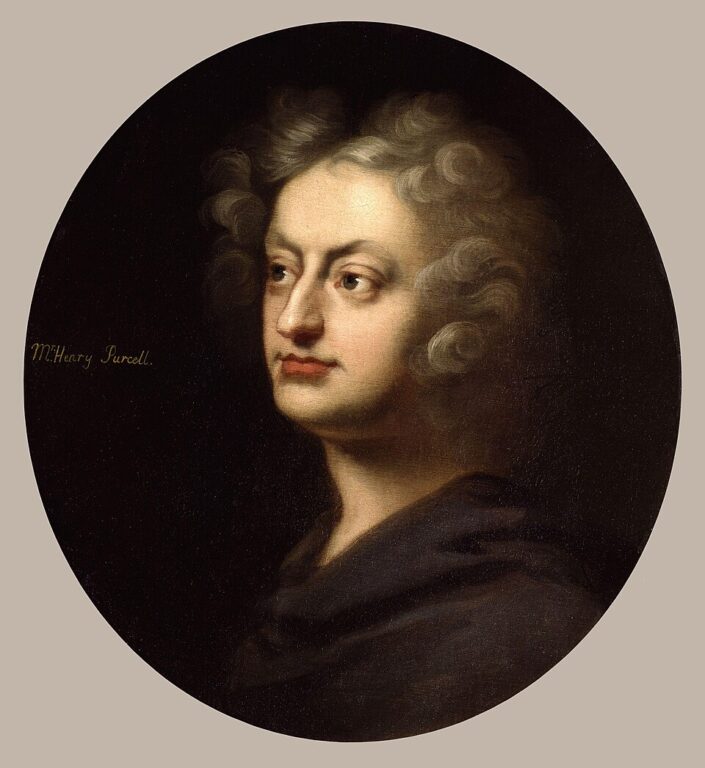
Henry Purcell · Baroque
1659 – 1695
1692 · Semiopera · London
Tonality
Without a unique tone. Like all semiopera, he goes through many tonalities along his musical masked.
Instruments
- 2 sweet flutes
- 2 oboes
- 2 trumpets and timbals
- Rope (violins, viola and bass)
- Continuous low
From the atril
The Fairy-Queen was released in London in 1692 on an anonymous adaptation of The dream of a summer night Shakespeare's. Curiously, Purcell did not put music to any verse by Shakespeare: the music is in the big masked that close every act, fantastic and spectacular scenes that have little to do with the plot. The score was lost shortly after the composer's death and did not reappear until the early 20th century, in the Royal Academy of Music library.
I can INTEREST you.

It's Purcell's richest stage score, almost a catalogue of his genius. There is a scene of the drunk poet of delicious humor, a masquerade of the dream of hypnotic beauty, a burlesque dialogue between the peasants Corydon and Mopsa, a masquerade of the four seasons and a final wedding with an aria for trumpet and voice, «Hark! The echoing air». The most exciting piece is «O let me weep», known as «The Plaint», an obstinate low lament with forced violin that rivals Dido's.
What to hear
- The dream masquerade, «See, even Night himself is here».
- «O let me weep», the lament known as «The Plaint».
- «Hark! The echoing air»with a trumpet.

