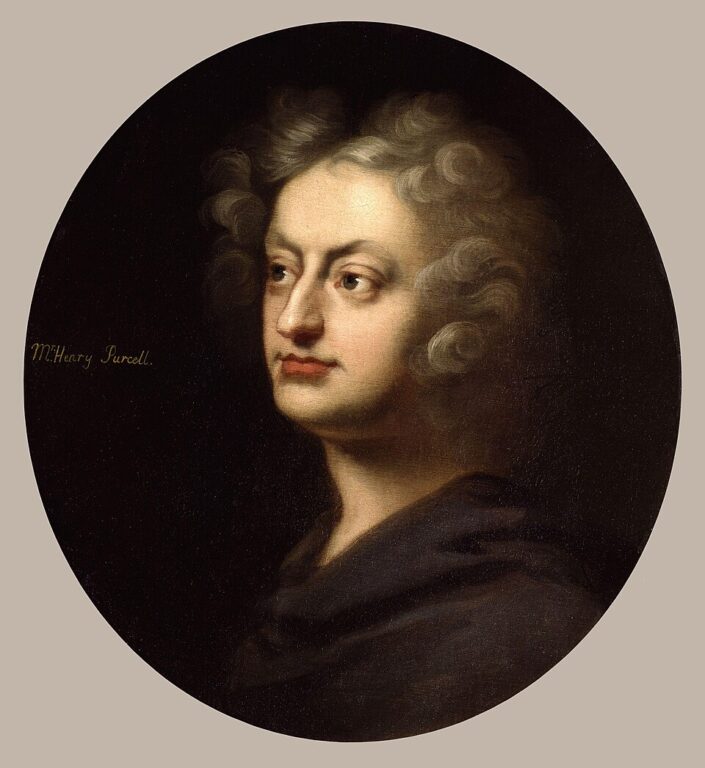
Henry Purcell · Baroque
1659 – 1695
1691 · Semiopera · London
Tonality
Without a unique tone. Like all semiopera, he goes through many tonalities throughout his musical scenes.
Instruments
- 2 sweet flutes
- 2 oboes
- 2 trumpets
- Rope (violins, viola and bass)
- Continuous low
From the atril
King Arthur, or The British Worthy is a semiopera, a very English genre in which the main characters speak as in theatre and music appears in scenes of magic, ceremonies and supernatural episodes. The text is by John Dryden, the great poet of the time, and the work was released in London in 1691. He tells the struggle of King Arthur against the Saxons, with magicians and spirits in between.
The most famous scene is that of the Cold, in the third act. Cupid wakes up the Cold Genius, who sings «What power art thou» with the voice intertwined, on strings that tremble in repeated notes as if they were shrieking, and advances through frozen chromatic harmonies. Then the chorus of the cold people repeats the effect. It is one of the most original passages of the 17th century. The work ends with a tribute to England in which the song stands out «Fairest Isle», of a beautiful melodic simplicity.
What to hear
- The Cold scene, «What power art thou».
- The choir of the Saxon sacrifices of the first act.
- The song «Fairest Isle».

