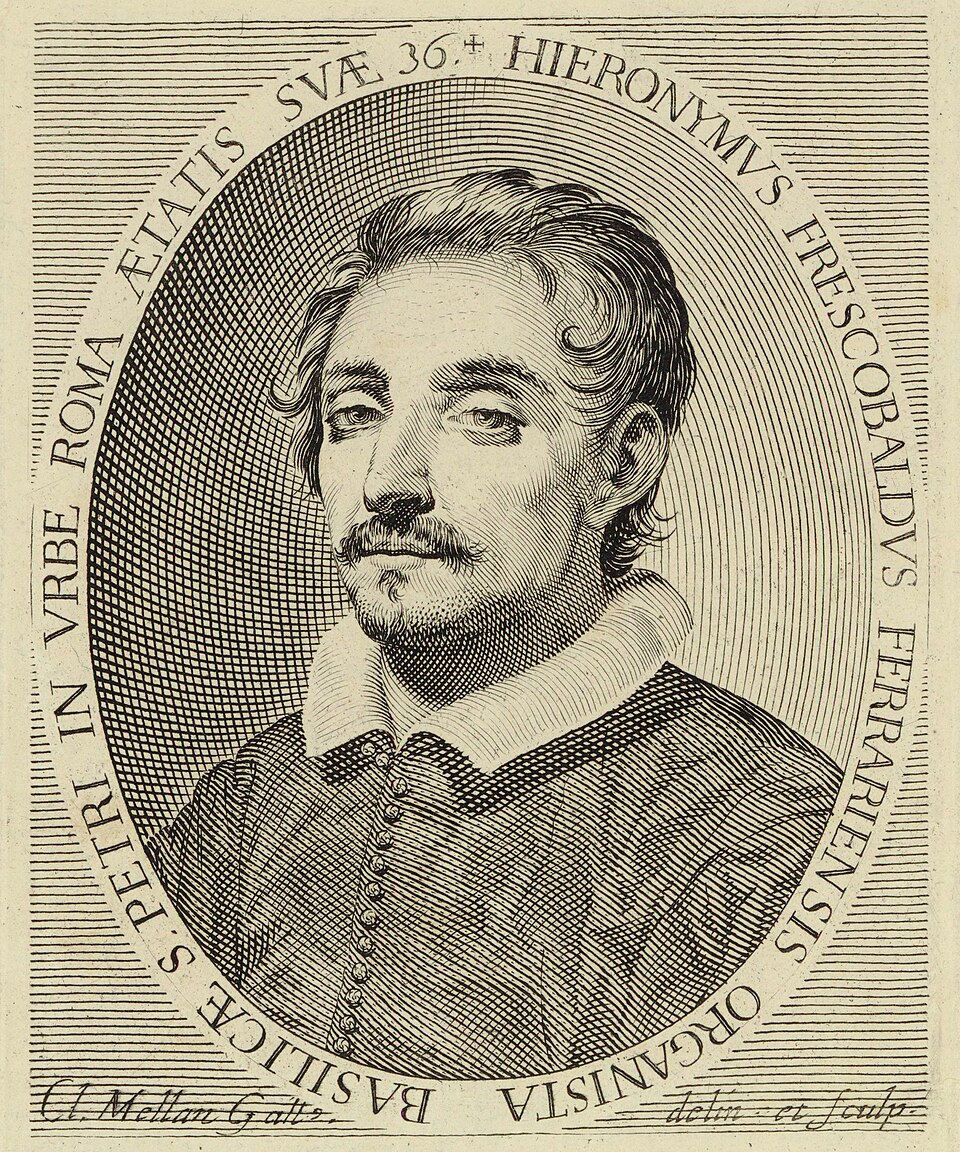
Girolamo Frescobaldi · Baroque
1583 – 1643
1615 · Body and key · Rome
Tonality
Without a unique tone. It is a collection of pieces written in the ecclesiastical ways, prior to the system of greater and minor tonalities, and each has its own.
Instruments
- Keyboard (organ or key)
From the atril
Published in Rome in 1615, this collection brings together two very different types of piece. The ricercar is a rigorous counterpoint, heir to the Renaissance motete, with long themes that enter one voice after another; the canzone, on the other hand, derives from the French song and has a much lighter character, with a characteristic initial rhythm and contrasting sections.
Playing the two guys side by side is a good style exercise. The ricercari ask for calm, a sustained sound and a chorus that let hear every entry of the theme, almost as if he sang a choir. The canzoni ask for agility, clear articulation and a sense of humor: they change of compass and tempo, play with imitations and have some dance. The two sides of the Frescobaldi organist of San Pedro.
What to hear
- The successive entries of the theme in the ricercari.
- The typical initial rhythm of the canzoni.
- The contrast between rigor and lightness.

