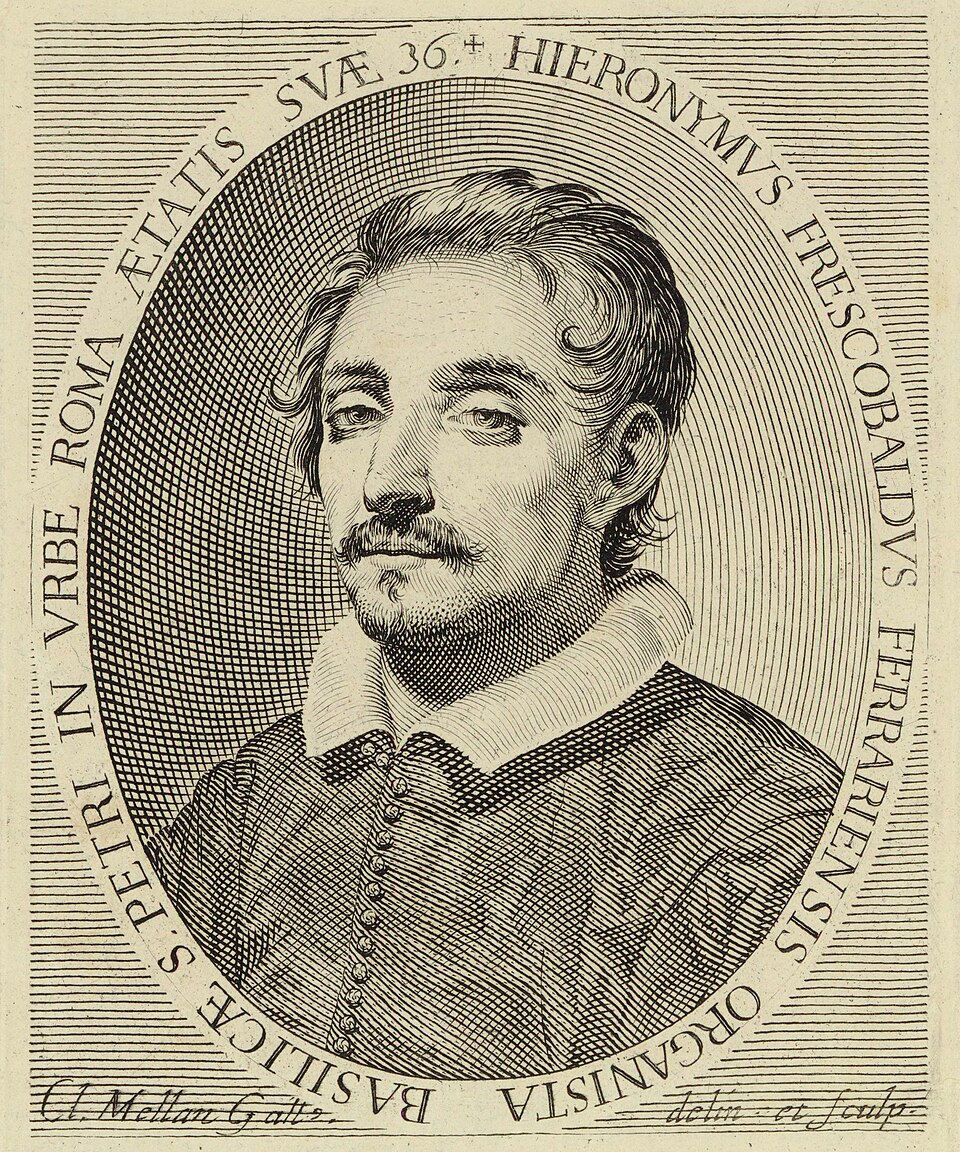
Girolamo Frescobaldi · Baroque
1583 – 1643
1624 · Keyboard · Rome
Tonality
Without a unique tone. It is a collection of pieces written in the ecclesiastical ways, prior to the system of greater and minor tonalities, and each has its own.
Instruments
- Keyboard (organ or key)
From the atril
The capriccio It was a free counterpoint piece, in which the composer could give free rein to his ingenuity. Frescobaldi published this collection in 1624, and each whim is part of a curious idea: the cuckoo song, the ascending and descending hexachlorordal scale, a popular melody like the «Bassa fiamenga» or a theme built with dissonances, calls «Belgizze».
It is Frescobaldi on its most playful and experimental facet. In the whim of the cuckoo, the call of the bird, a third descendant, appears again and again among the other voices; in that of the Honduran, disonances collide without immediate resolution and produce an almost modern effect. For the interpreter are long and demanding pieces, which ask for good humor, clarity in the counterpoint and a wide variety of colors.
What to hear
- The cuckoo call between the voices.
- The dissonances of whim «di durezze».
- Variations on popular melodies.
Listen
Capricci di Frescobaldi · sergio vartolo
When you press the YouTube player will be loaded.

