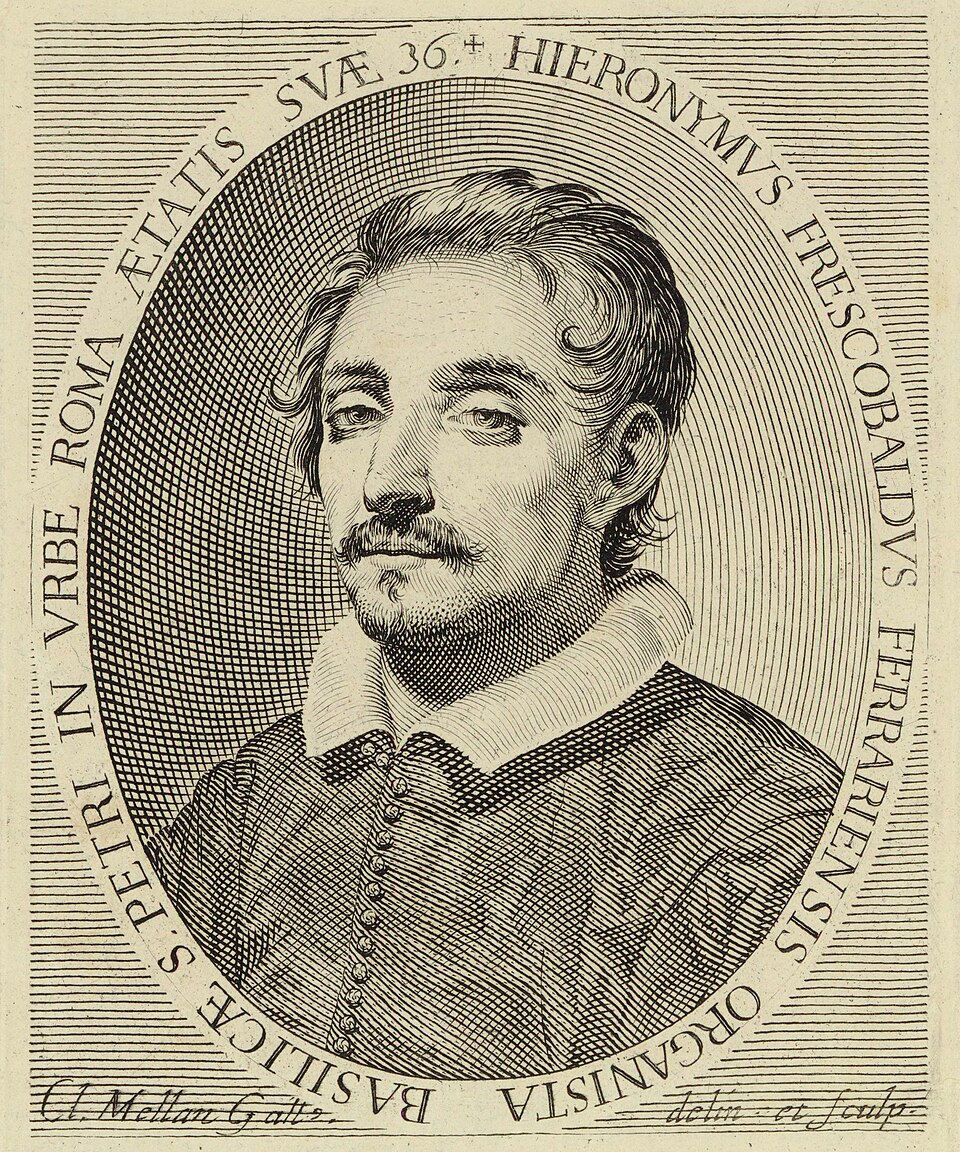
Girolamo Frescobaldi · Baroque
1583 – 1643
1635 · Organ · Venice
Tonality
Without a unique tone. Gather the music for the organ of three masses, written in the ecclesiastical ways, and each piece has its own.
Instruments
- Organ
From the atril
The Fiori musicali, «Musical flowers»published in Venice in 1635, they are the last great collection of Frescobaldi and its most influential work. They contain the organ music for three masses, that of Sunday, that of the apostles and that of the Virgin, with plays, kyries, canzones and ricercari for each moment of the liturgy, and end with two whims on popular melodies, the «Bergamasca» and «Girolmeta».
I can INTEREST you.

It is the sum of the organic art of Frescobaldi: master counterpoint, short-term high-concentration plays and a writing that knows each resource of the instrument. Bach had a handwritten copy of the work, dated 1714, and its influence reached the 18th century counter-point treaties. There is a curiosity for the organist: in one of the ricercari, the interpreter must sing a fifth voice that is not written, and find out where he himself fits.
What to hear
- The short touches for the elevation.
- The ricercar with the fifth voice sung.
- The «Bergamasca» from the end.
Listen
Frescobaldi Fiori Musicali Luigi Ferdinado Tagliavini Brescia · Frederic Munoz
When you press the YouTube player will be loaded.

