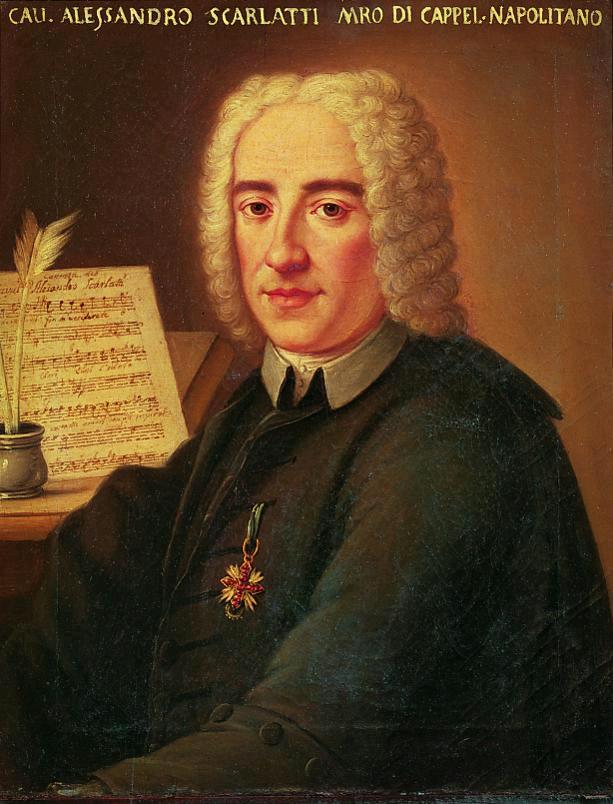
Alessandro Scarlatti · Baroque
1660 – 1725
1694 · Opera · Naples
Tonality
Without a unique tone. Like every opera, he goes through many tonalities along his arios and recites.
Instruments
- Solo voices.
- Rope Orchestra, with winds in some numbers.
- Under continuous (key, cello and contraband).
From the atril
Premiere in Naples in 1694, when Scarlatti was already a chapel master of the viceroy, Il Pirro e Demetrio a dynastic intrigue, cross-loving and comical scenes of servants, the Venetian recipe that he adapted to the Neapolitan taste. He was one of his most traveling operas: in 1708 he was represented in London, in a mixed version in Italian and English, and he liked it so much that he helped open the way to Italian opera in England before the arrival of Handel.
Musically it is the Scarlatti of full theatrical maturity: arias gives well defined capo, with a contrasting central part and a return to the beginning that the singer adorns. Many arias have only continuous accompaniment, which forces the group to be very eloquent with few means. It's a score that calls for an initiative-driven carnation and humorous singers.
What to hear
- The Aryans give capo and how the singers decorate the repetition.
- The maids' scenes, a direct antecedent of the Neapolitan opera.
- The Aryans with only continuous, where the low dialogue from you to you with the voice.

