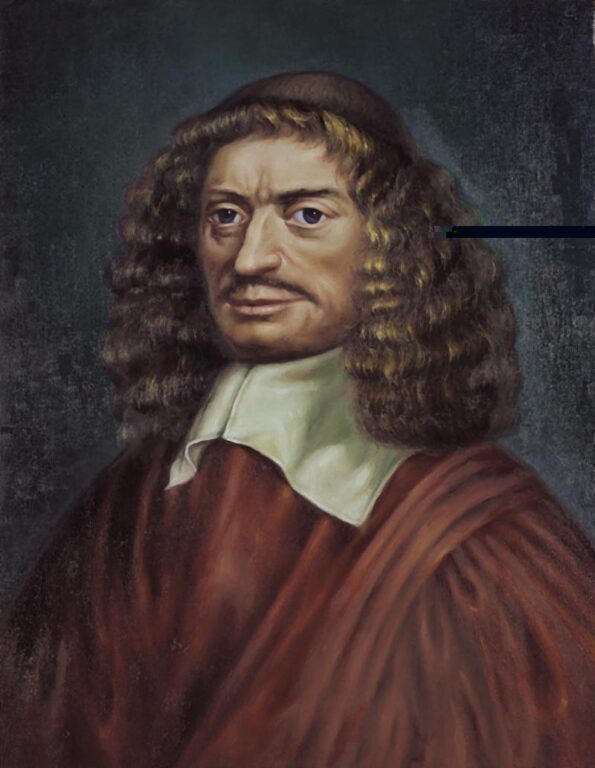
Giacomo Carissimi · Baroque
1605 – 1674
s. XVII · Sacred music · Rome, Sant'Apollinare
Tonality
Without a unique tone. It is a set of sacred works of still modal language, and each has its own center.
Instruments
- Solo voices and chorus.
- Continuous low (organ).
From the atril
As a chapel teacher of Sant'Apollinare for more than forty years, Carissimi wrote a great deal of liturgical music: masses, psalms and motetes in Latin for the worship of the church of the German College. Much has been lost or preserved in copies of dubious authorship, but what remains shows a composer who dominated both the old and the new style.
I can INTEREST you.

In the masses, the counterpoint of the tradition of Palestrina and the concerted style, with soloist and continuous low voices, coexist. The motetes, on the other hand, are usually for few voices and are closer to their oratoriums: the text is strongly declined and the music highlights each image. For a camera choir it is a very rich and still unexplored repertoire, ideal for discovering the musical Rome of the 17th century.
What to hear
- The contrast between old and concerted style.
- The express claim of the motetes.
- The soloist voices on the continuous bass.

