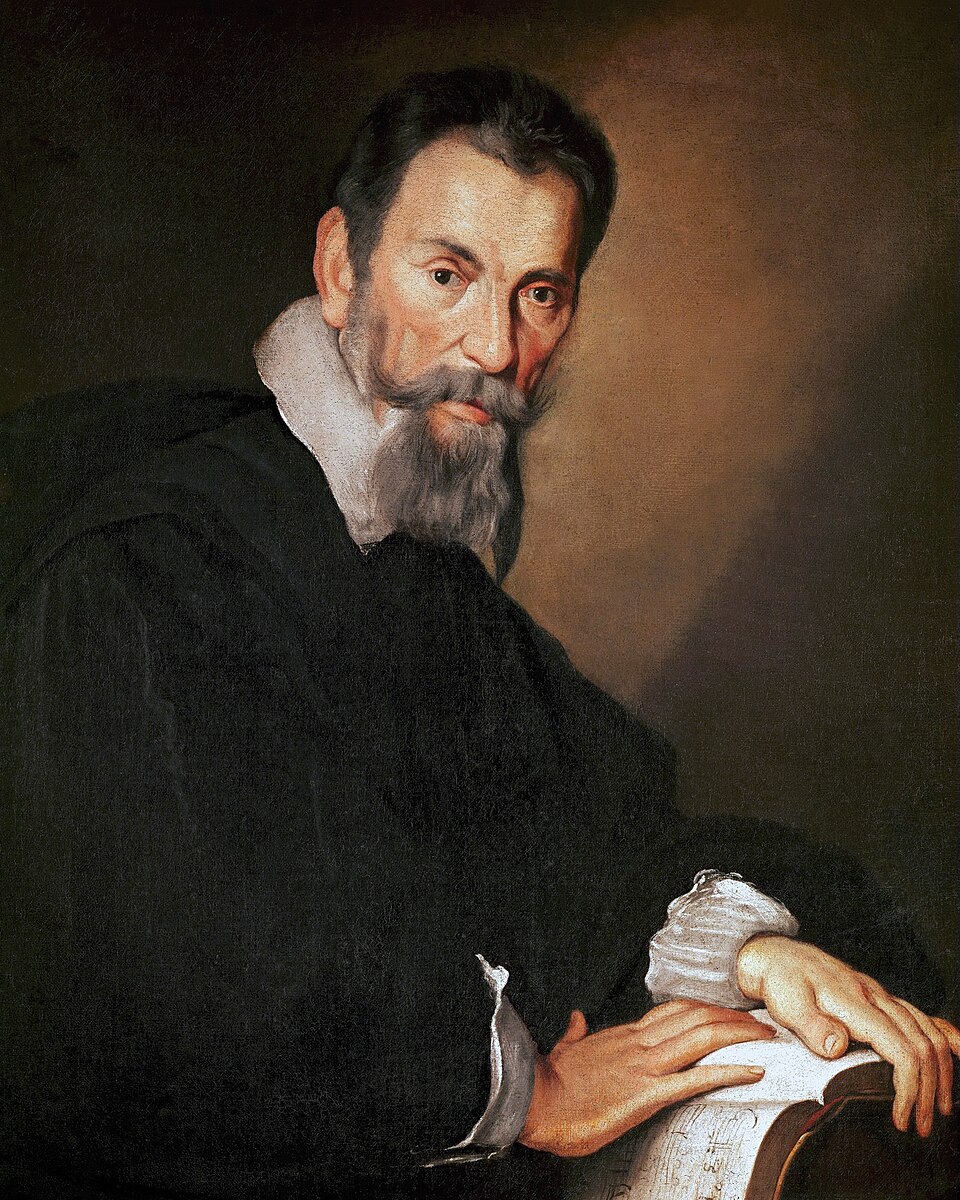
Claudio Monteverdi · Baroque
1567 – 1643
1643 · Opera · Venice
Tonality
Without a unique tone. Like every opera, it goes through many tonalities, and its language is halfway between the modality and the modern tonal system.
Instruments
- Sail to three and four parts (violins and violas)
- Continuous low
From the atril
It is the last opera of Monteverdi, premiered in Venice shortly before his death, with libretto by Giovanni Francesco Busenello. And it is astounding modern: for the first time the opera is not about gods or mythical heroes, but about historical characters, and vice triumphs. The Emperor Nero repudiates his wife Octavia, dislands all those who oppose and crown his lover Popea. The virtue, represented by the philosopher Seneca, ends up forced to suicide.
The music portrays each character with extraordinary psychological precision: the sensuality of Popea, the despair of Octavia in his farewell to Rome, the stoic serenity of Seneca in the face of death. Finish the duo I look at you.on an obstinate bass of a hypnotic sensuality; today it is believed that another composer of his environment could write it for a replacement. From the continuum, it's a score as open as Ulissethat every team of interpreters has to recreate.
What to hear
- The scene of the death of Seneca, with the choir of his disciples.
- The farewell of Octavia, Addio Roma.
- The final duo I look at you..
Listen
Philippe Jaroussky - Danielle de Niese: Monteverdi, L'Incoronazione di Poppea · Warner Classics
When you press the YouTube player will be loaded.

