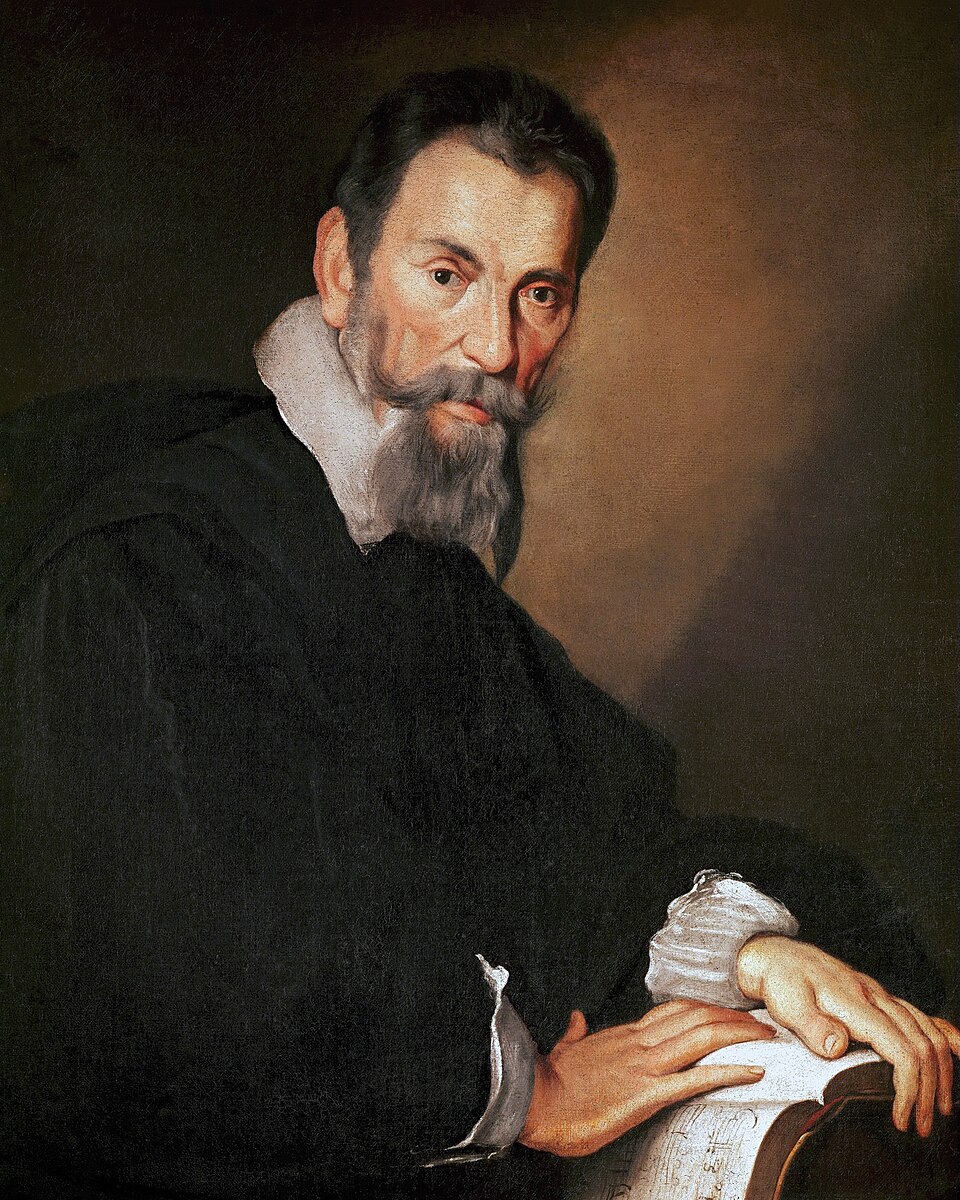
Claudio Monteverdi · Baroque
1567 – 1643
1624 · Drama scene for three voices and rope · Venice
Tonality
No tonality in a modern sense. It is modal music from the early 17th century, before the system of greater and minor tonalities.
Instruments
- 4 violas da braccio (soprano, high, tenor and low)
- Viola (contrabasso da gamba)
- Key
From the atril
It was presented in 1624 at the Venetian palace of Girolamo Mocenigo during the carnival, and was published fourteen years later in the Eighth Book of Madrigals. The text comes from Jerusalem released de Tasso: the Tancredi crusade fights at night against an enemy warrior without knowing that he is Clorinda, the woman he loves. When he smites her with death and takes away her elm, she recognizes her; she asks for baptism and dies in peace.
For the rope it is a revolutionary work. Monteverdi invents here the stile concitate, the agitated style: repeated notes at full speed that imitate the horse's gallop and the swords' shock. He also asks musicians to leave the bow and pinch the strings with two fingers, one of the first pizzicatos written in history. A narrator tells the action as the two lovers sing their few sentences, and the end, with the serene death of Chlorinda, is of a disarming beauty.
What to hear
- The horse's gallop on the rope.
- The repeated notes of stile concitate in the fight.
- The last words of Chlorinda: S'apre il ciel; io vado in peace.

