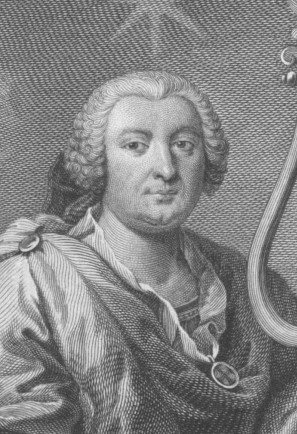
Carlos Seixas · Baroque
1704 – 1742
c. 1720 - 1742 · Masses, Te Deum and motetes · Lisbon
Tonality
Without a unique tone. It is a set of masses and sacred works, and each has his own.
Instruments
- Solo voices and chorus.
- Orchestra in some works.
- Continuous low (organ).
From the atril
As an organist of the cathedral and vicemaestro of the Royal Chapel, Seixas also wrote religious music, although little is preserved: some mass, a Te Deum and several motetes. Much of Lisbon's musical heritage was lost in the 1755 earthquake, and it is likely that many of its works would disappear with it.
What has survived shows a composer very different from that of sonatas. Here it dominates the Iberian polyphonic tradition, with chorus that dialogue and a solid counterpoint, mixed with elements of the Italian concerting style that dominated the court of John V. For a continuous musician, the organ holds a broad and solemn sonority. It is a still little explored repertoire that helps to understand the wealth of music in the 18th century Portugal.
What to hear
- The dialogues between chorus, heritage of the Iberian polyphony.
- The influences of the Italian concert style.
- The contrast to his keyboard music.

